Tag: mental-health

  • Who’s Training Who? My Dogs Might Be the Real Life Gurus

    I’ve hired and worked with many consultants over the course of my career, taken many leadership training classes, subscribed to podcasts, and read and highlighted pages in some of my favorite personal development books. But it turns out, my best life coaches have been at my side (and under my desk) this whole time. They have four legs, fur, and absolutely no understanding of personal space. NONE.

    Meet Stanley and Stella — my rescue pups, my furry soulmates, and, as I’ve recently realized, my life coaches. They may not have diplomas and degrees, but they’ve got great insight. Their wisdom is simple, consistent, and always delivered with a tail wag…especially when treats are involved.


    Masters of Presence
    Stanley doesn’t care about what happened yesterday. Stella isn’t worried about next Tuesday’s meeting. They are fully present. They remind me to stop overthinking, to notice the breeze on a walk, and to enjoy the moment I’m in. When we’re outside, they’re not scrolling, comparing, or planning. They’re living. That’s a lesson I didn’t know I needed.


    Loyalty and Love, Unfiltered
    There is something grounding about coming home to a pair of dogs who act like you’ve been gone for years, even if it’s only been 20 minutes. I mean, seriously, they lose their minds! Their loyalty is unwavering. They remind me to nurture relationships that feel that steady and supportive. If your people don’t light up when you walk in the room, find the ones who do.


    Boundaries Are Everything (except when it comes to personal space..then forget it)
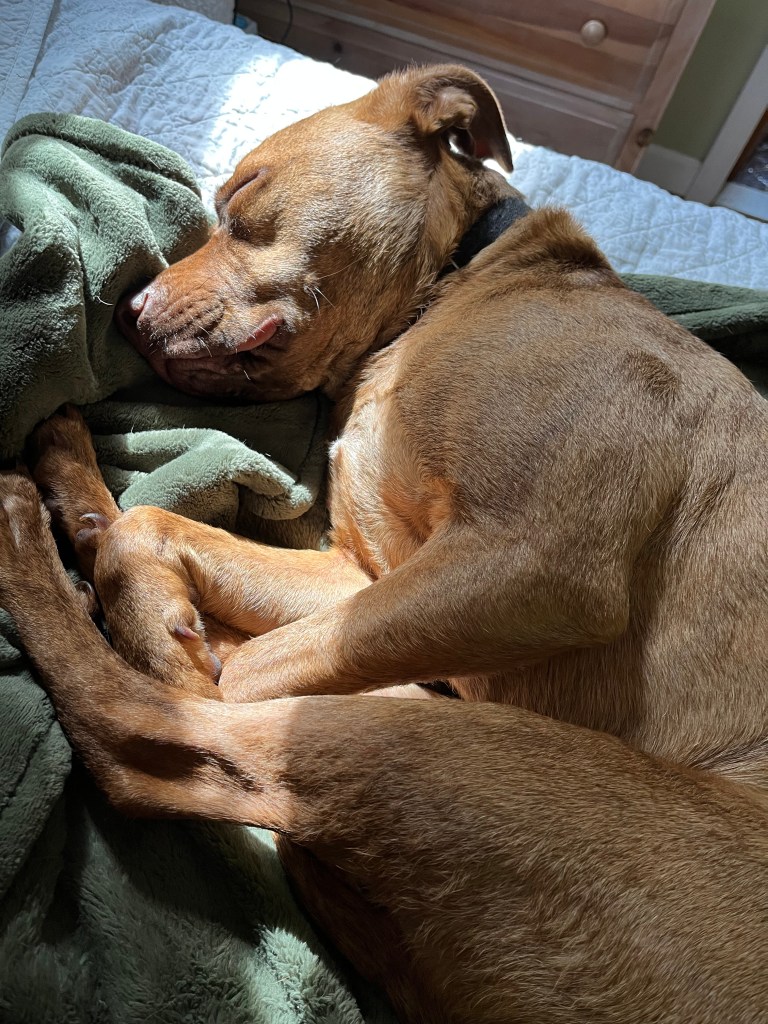
    When Stanley is done for the day, he’s done. He doesn’t ask for permission to take a nap in a sunny corner of the room. He doesn’t feel guilty about rest. He plays hard and rests harder. Stella, on the other hand, has a clear internal clock. She knows when it’s time to pause and when it’s time to move. Lesson learned: rest is productive. Recharge like your well-being depends on it — because it does.


    No Overthinking Allowed (this is a big one, guys!)
    Dogs don’t spiral. They don’t get imposter syndrome or anxiety over what someone meant by “see you soon,” or “k.” They show up exactly as they are. Stella walks into a room like she owns it (and let’s be real, she does). That kind of confidence is contagious. She teaches me to stop second-guessing and start trusting my gut.

    Here’s another life lesson…sometimes when someone says “k” or “see you soon” that’s all it means. Nothing else…just acknowledgement. Let’s try to keep that in check. We don’t have to overanalyze every. single. thing. Dogs sure don’t!


    Consistency Is Queen (and King)
    Walks, meals, treats, and bedtime routines — dogs thrive on structure. And when I stick to a rhythm with them, I thrive too. They’ve taught me that consistency doesn’t mean boring; it means steady growth, predictable peace, and sustainable habits. Showing up daily (even for a walk around the block) is more powerful than waiting for the “perfect” moment.


    So, What If We Took a Page from Their Playbook?

    Stanley and Stella don’t need apps, calendars, or vision boards. They just need love, movement, rest, and purpose. And maybe some peanut butter. They remind me that being present, showing love, setting boundaries, trusting myself, minding my business, and staying consistent are more than just life lessons — they’re a lifestyle.

    My final lesson today? Technically, I’m the one holding the leash—but when it comes to life lessons, they’re leading the pack. 😉

    Make Moves, Live Boldly!

    Denise xo

    **Got a furry life coach of your own? Drop their name and best lesson below!
  • If You Knew Tomorrow Would Change Everything, How Would You Live Today?

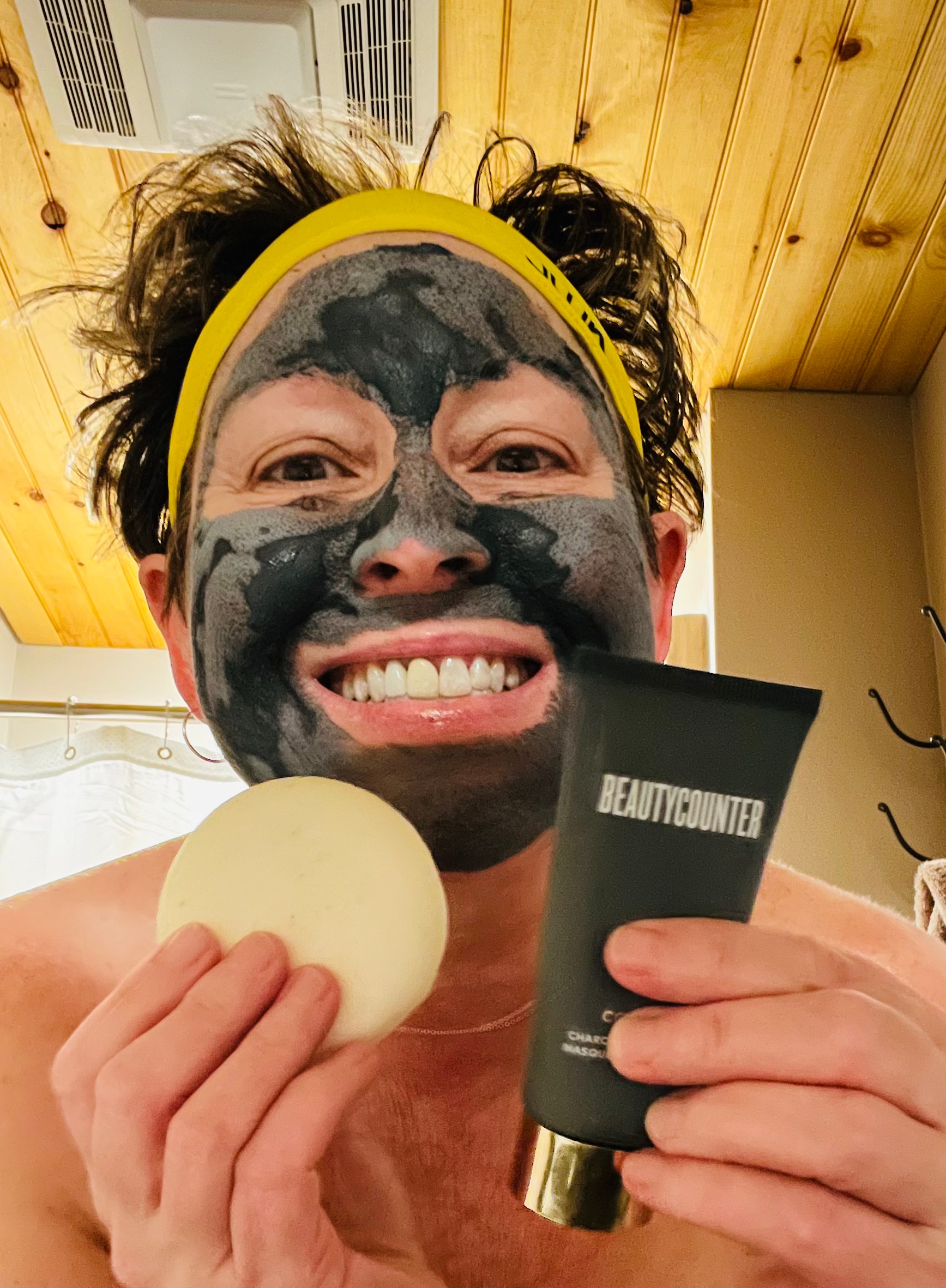
    January 1st started like any other day. I was out on the trails — doing what I love — feeling strong, hopeful, and excited about everything I had planned for the new year. I was having fun, taking selfies, showing off some of my favorite skincare, soaking in the fresh start that January always seems to bring. In that moment, life felt solid. Safe. Predictable.

    And then, less than 24 hours later, everything changed.

    One misstep.
    One fall.
    One accident that I never saw coming.

    The day after that first picture was taken, I found myself hurt, scared, facing a serious surgery, and unsure of what the next few months — or even the next few days — would look like. Everything I thought I could count on — my routines, my independence, my physical strength — was stripped away in a second.

    And when I look back now at the photos side by side, it almost doesn’t feel real. How can life shift so dramatically between one sunrise and the next?

    It’s a gut punch reminder that nothing is promised. Not our health. Not our plans. Not even our ability to lace up our shoes and walk out the door.

    If you knew your life could change tomorrow, how would you live today? Would you rush through it? Would you waste it on things that don’t matter or people who aren’t worthy of your time or mind space? Would you stay quiet about the dreams that are burning inside you, waiting for the “right” time?

    Or would you wake up?

    Would you say the thing you’ve been meaning to say? Would you finally take the risk? Would you stop waiting for the “perfect moment” to start living fully? Would you finally start focusing on your health and wellbeing?

    I wish I could go back and tell the version of me on January 1st:
    Savor it. Really, truly savor it. Laugh harder. Hug tighter. Trust your strength, but also respect how fragile this life is.

    But since I can’t go back, I can only move forward — differently.
    Wiser.
    Softer.
    More awake to the small, beautiful details of every day.

    The truth is, life will change. We just don’t get to choose when.

    But we do get to choose how we live right now.

    And today, I’m choosing gratitude. I’m choosing courage.
    I’m choosing to live like it could all change tomorrow — because it can.

    If you’ve been waiting for a sign to do the thing — this is it.
    Book the trip. Start the business. Write the book. Lift weights like your life depends on it — because it does. Get outside. Soak in the sun. Chase the moments that make you feel alive. Whatever it is that’s been tugging at your heart, now is the time.

    We can’t control what tomorrow brings. But we can choose to live fully today.

    Make Moves, Live Boldly!

  • Surviving a Narcissist: The Toxicity, The Chaos, and The Lessons

    Have you ever been the target of a narcissist? If so, you know the mental gymnastics, the manipulation, and the relentless toxicity that come with it. If you haven’t—consider yourself lucky.

    It wasn’t until later in my adult life and career that a narcissist quietly infiltrated my world. My narcissist disguised themselves as good, pure, loving, and honorable—a true chameleon. At first, it was all rainbows and butterflies—until, suddenly, I had no idea what hit me.

    My fight-or-flight instinct kicked in, but instead of running, I looked around at others, who seemed fine, and thought, “It must be me.” (Ugh…a home run for the narcissist.)

    The ironic part? The moment I started confiding in friends and family, they immediately said, “You’re dealing with a narcissist.” It wasn’t one big, obvious event—it was a slow, calculated unraveling. A series of tiny, almost imperceptible manipulations that built the foundation for something far more damaging.

    Fortunately for me, our relationship ended abruptly. At first, I was in shock. But with time—and a lot of self-reflection—I finally felt something I hadn’t in a long time: I could breathe again. Really breathe.

    I was recently talking to a friend about the crushing grip narcissists have on their victims and the slow surrender we unknowingly give them. It’s a psychological game—one designed to strip away your confidence and leave you questioning your reality. And escaping? That’s another battle entirely for so many.

    Breaking free from a narcissist feels like emerging from a cult-like trance—your identity shaken to its core. Thank goodness for the self-help section on Amazon, podcasts, and therapy, right?!

    The Narcissist’s Playbook: A Masterclass in Manipulation

    At first, they charm you (This is known as the honeymoon phase.). They praise your work, admire your talents, and build you up—only to slowly chip away at your confidence. The gaslighting is subtle at first:

    🌀 “I never said that.” (They did.)
    🌀 “I’m sorry you feel that way.” (Zero accountability.)
    🌀 “I’ve done so much for you, and it’s not appreciated.” (Lies.)

    Before you know it, you’re walking on eggshells, second-guessing yourself, and questioning truths you once knew. That’s the toxicity of a narcissist—they LITERALLY rewrite reality to serve their ego.

    The Fallout: Breaking Free from the Cycle

    Realizing you’re in a narcissist’s grip feels like waking up from a nightmare you didn’t know you were trapped in. You start seeing the patterns, the control, the meanness, the manipulation—but getting out? That’s where the real fight begins, especially for those married to one (for the sake of my husband, I want to clarify that I’m not referring to him here).

    Narcissists don’t let go easily. They crave control. They twist narratives, spread lies, and play the victim to maintain their power. And when you finally break free? They’ll do everything in their power to paint you as the villain.

    The Lesson: Reclaiming Your Power

    Here’s the good news—you learn. You recognize the red flags sooner. You set boundaries quicker and stronger. And most importantly, you take back your power!

    If you’ve been through this, you’re not alone. The scars narcissists leave behind are real, but they’re also proof that you survived.

    Want to Outsmart a Narcissist? Listen to This.

    Mel Robbins has hosted remarkable guests who break down the psychology of narcissists—and, more importantly, how to break free from their grip. If you haven’t listened to Outsmart a Narcissist: A Proven 4-Step Plan to Take Your Power Back, it’s a must, so grab your 🎧 headphones and listen with intention and purpose.

    I listened to it on a hike—the place I go to find clarity. I’d love to know what you think after you listen to the full episode.

    For anyone who needs some tips and strategies, I’m including a great resource I found from The Counseling Center Group. Here is “How to Handle a Narcissist: 8 Effective Strategies For Self-Care.

    Have you ever dealt with a narcissist? Drop a comment or share your experience—because the more we talk about it, the more we reclaim our power, and the more we help others.

    Make moves, live boldly!


    2 responses to “Surviving a Narcissist: The Toxicity, The Chaos, and The Lessons”

    1.  Avatar
      Anonymous

      You nailed it! Thanks for sharing and reminding us to assess all relationships. Life’s too short to spend time with the wrong people.

      Like

      1. Denise Irving Avatar

        Thank you so much for reading my post, and I’m glad it resonated with you. For people who haven’t experienced this behavior it can take some time to realize what is happening in the relationship.

        Assessing all relationship is spot on!

        Like

    Leave a comment

  • Navigating a Fast World on a Slow Path

    I was chatting with a friend and mentioned I was having a tough day. After listening, she encouraged me to write about it. So, her push for me to be open and honest led to this post—a raw reflection of my frustration and reality.

    I never imagined a shattered ankle would be my wake-up call, but life has a way of delivering unexpected lessons. One moment, I was moving effortlessly through my days; the next, I was sidelined, kicked out of my active lifestyle—grappling with anxiety, depression, relying on others for the smallest of tasks, and adjusting to life with a walker, knee scooter, and boot. Suddenly, I was forced to see the world through a completely different lens, confronting the daily frustrations of a society that isn’t designed for those with mobility challenges.

    Imagine going from living independently to carefully strategizing how to get in and out of your own home. Let me tell ya, it sucks! Simple movements become calculated efforts, and every outing feels like an obstacle course. It’s a humbling shift that opened my eyes to struggles so many people face—struggles often invisible in a world built for speed and convenience.

    From the moment I left the hospital, one truth became painfully clear: our society prioritizes efficiency and accessibility, but only for the able-bodied.

    The simplest tasks—getting through a doorway, maneuvering through a store, getting in and out of cars, climbing stairs, cooking, or even navigating sidewalks—become daunting obstacles. True resilience isn’t just about physical strength; it’s about adapting, problem-solving, and pushing forward in a world that often isn’t built for everyone.

    The Everyday Struggles We Don’t See

    Before my injury, I never noticed how difficult it was to find a ramp that wasn’t blocked or how hard it was to navigate a crowded space without feeling like an inconvenience. Now, I have no choice but to experience it firsthand. Doors without automatic openers, uneven sidewalks, narrow aisles, inaccessible bathrooms—barriers I had overlooked were now glaringly obvious.

    I find myself exhausted, not just from the physical strain of getting around, but from the constant mental calculations required to do basic things. And if I, someone with a temporary injury, feel this way, what about those who face these challenges every single day?

    The Fight to Live Fully

    The real flex…despite these obstacles, people with disabilities courageously push forward, building careers, chasing dreams, and making an impact—all while navigating a world that often forgets them. Their perseverance isn’t just inspiring; it’s a testament to the human spirit.

    But should it be this hard? Should people have to fight this much just to live a fulfilling life? Absolutely NOT!

    Slowing Down and Showing Up

    This experience has made me more aware, compassionate, and determined to do better moving forward. Accessibility isn’t just about ramps and wider doorways—it’s about mindset. It’s about slowing down long enough to notice who is being left behind and taking action.

    So, let’s pause. Let’s take an extra few seconds to hold a door, clear a path, offer assistance, or simply acknowledge that not everyone can keep up with the chaotic pace of the world.

    Because if life is moving too fast for us to extend a hand, maybe it’s time to rethink the way we’re moving altogether.

    True progress isn’t just about innovation, but inclusion. The burden of accessibility shouldn’t fall solely on those who struggle—it should be a shared responsibility. If we all take small steps toward awareness and action, we can create a world where no one feels like an afterthought.

    I found this great article: 15 Ways to Show Kindness to People with Disabilities—it offers small but meaningful ways to make a difference. Because the goal isn’t just to help people get by; it’s to empower them to excel.

    As I close, the question I will ask myself as I slowly begin to get my legs under me again: How can I be a better human and help those individuals not just get by, but truly thrive?

    I’d love to hear your thoughts. Drop a comment, and let’s talk!👇🏼


    Leave a comment