As we head into a season built around gratitude, I want to pause for a moment and send a heartfelt thank you to you — the incredible community that continues to support my blog, my work, and the pieces of my life I choose to share.
This year has stretched me, strengthened me, and reminded me how much there is to be grateful for. Healing from my ankle break taught me patience, resilience, and the power of simply putting one foot in front of the other, literally and emotionally. It reminded me how strong the human body is, and how much stronger we become when we give ourselves grace.
I’m so deeply grateful for my health, even when it challenged me. I’m grateful for my family, who love me through every high and low. I’m grateful for friends who show up, check in, lift me up, and always make me laugh. And I’m endlessly grateful for this community…for your encouragement, your curiosity, your messages, and your willingness to join me in conversations about wellness, growth, and living with intention.
Your support means more than you know. Every read, every share, every reply… it all reminds me why I write and why connection matters so much.
Thank you for being here. Thank you for letting me share my world with you. And thank you for walking this journey with me — through healing, through evolving, and through every season of life.
I wish you a season filled with joy, love, and simplicity.
Every year, the holiday season sneaks up on us faster than we think. One minute it’s pumpkin spice latte’s and cozy sweaters… and the next, you’re surrounded by office candy bowls, holiday parties, rich dinners, extra cocktails, and endless baked goods.
It’s fun…until it’s not.
Because here’s the truth: Most people enter the holidays with zero strategy. No plan. No boundaries. No support system.
And that’s when things start to unravel.
Gym sessions get skipped. Late nights become the norm. Energy plummets. Healthy habits fade.
And by the time January 1st arrives, instead of feeling refreshed, most people feel frustrated, facing the dreaded holiday weight gain (fact: the average person gains up to 10 pounds…yikes!).
But this year CAN be different.
You can enjoy the holidays. You can stay consistent. You can go into January feeling strong, not defeated.
All you need is a plan.
The No. 1 Reason People Struggle During the Holidays: They Don’t Have a Plan
When you don’t have a plan, the season controls you. When you do have a plan, you stay in control.
A good holiday plan doesn’t have to be complicated, it just has to be intentional and realistic.
Below is a simple structure you can start using today.
🎄 Your Holiday Survival Plan
1. Non-Negotiables (Pick 3)
These are the habits you protect no matter what. Choose three and commit.
Examples:
30 minutes of movement 4–5 days a week
A protein-focused first meal
Water before every holiday drink
8,000–10,000 steps
No “grazing” on office candy bowls
Lights out by 10pm on weeknights
These anchor you during the chaos.
2. Pre-Plan Your Weak Spots
Look at your next 6-8 weeks:
Office parties
Family dinners
Travel
Cookie swaps
Social events
Then decide ahead of time:
What will you eat first? (Hint: protein + veggies)
How many drinks will you have?
Will you walk before or after the event?
Decisions made before the moment equal better outcomes in the moment.
3. Use Supportive Tools (This Is Where Peptides Come In…and, I swear by them)
You don’t have to rely on willpower alone, especially during the most tempting season of the year.
Bioactive peptidesoffer science-backed support to help your body stay balanced, energized, and regulated.
✅ Lean — “Nature’s Ozempic”
Controls cravings, steadies appetite, and reduces overeating triggers.
✅ Hydrated — All-Day Electrolyte + Hydration Support
Winter = dehydration. Hydrated keeps your energy steady and inflammation down.
✅ Fit — Daily Metabolic + NAD+ Support
Boosts energy, lowers cortisol, and supports recovery, exactly what your body needs during holiday stress.
Together, these three give you:
Less inflammation
Better metabolic balance
Fewer cravings
More energy
Better hydration
Controlled stress response
A huge advantage during a season of indulgence.
4. Build Your Week Around Movement (Not the Other Way Around)
Instead of “fitting in workouts,” schedule them first:
Sample weekly structure:
2 strength training sessions
1 conditioning/cardio session
2 walks (30–45 minutes)
Optional: 1 recovery day (stretching or yoga)
Movement keeps your metabolism active and your mindset strong.
5. Create a Few Go-To Holiday Strategies
Here are simple, doable tools:
✅ Before a party:
Drink a full glass of water
Eat protein at home
Take Lean to avoid overeating
✅ At the party:
1 plate — no grazing (so take only what you really want)
Start with protein & veggies
Alternate alcohol with Hydrated (another fave is sparkling water with a splash of cranberry)
✅ The day after:
Walk 20–30 minutes
Hydrated in the morning
Prioritize protein
Get back to routine (no guilt spiral!)
These tiny habits prevent big regrets.
You Can Enjoy the Holidays AND Feel Good In Your Body
You don’t have to choose between fun and health. You just need a strategy that supports both.
With a simple plan, supportive habits, and game-changing tools like Fit, Lean,andHydrated, you can:
✅ stay in control ✅ feel energized ✅ stay consistent ✅ reduce stress ✅ avoid holiday weight gain ✅ hit January feeling READY
Don’t wait until New Year’s to get serious. Start now, and let this be the season you thrive, not just survive.
Ready to Go Into the Holidays With a Plan That Actually Works?
If you want support staying consistent, energized, and in control this season, the Muscle + Metabolic Collection is your holiday advantage.
As Mental Health Awareness Month comes to a close, I wanted to take a moment to share something personal I’ve been learning to navigate—social anxiety.
You might be surprised to hear that from me. I show up, I work hard, I’m driven, I create, I share—and I’m often seen as an extrovert. But behind the highlight reels and daily hustle, there are moments when anxiety creeps in—quietly and powerfully.
❗My anxiety has kept me from joining group runs I genuinely wanted to attend. ❗It’s made me cancel meetings I’d already prepped for. ❗It’s convinced me to skip the gym on days I knew I needed movement. ❗It’s even stopped me from nourishing and hydrating my body when I needed it most.
Social anxiety doesn’t always look like panic—it can look like silence, avoidance, or simply staying small. And if you’ve ever felt that tug-of-war between wanting to show up and feeling frozen by anxiety, you are so not alone.
The Myth of “All or Nothing”
One of the biggest lessons I’ve learned is this: life doesn’t have to be all or nothing. ♥️ We can go hard and be soft. ♥️ We can chase goals and take breaks. ♥️ We can lead boldly and still need support.
I haven’t perfected the balance (who has?), but I’m committed to striving for it daily.
What’s Helped Me: From “Just Deal With It” to Calm
For years, I just “dealt with it.” I tried gummies, mild meds, and self-talk that didn’t quite stick. Some days were okay. Some were really hard.
Then I found Calm—a simple, all-natural powder that dissolves on your tongue and gently takes the edge off, without making me feel foggy or tired. It works with your body, not against it.
It’s like a warm hug in the middle of chaos. I take it before meetings, workouts, or whenever I need a reset—but my favorite time is in the evening. It’s been a game-changer.
If you’re navigating stress or social anxiety, I encourage you to explore what works for you. And if you’re curious about Calm—or just want to chat about the real, unfiltered stuff—I’m here.
Mamas, I See You
My kids are grown now, but I still remember the pressure that came with summer break—keeping everyone busy, managing the chaos, and trying to hold it all together.
If the thought of it already has you feeling stretched thin, you’re not alone.
And if you’re looking for a natural way to stay grounded and ease into the whirlwind of summer, Calm might be exactly what you need.
A study released this month by Columbia University found that 75% of mothers in the U.S. experience some form of mental or physical health challenge. That stat? It’s real—and it’s a reminder that we need tools and support, not just grit.
A Few Resources for Social Anxiety
Because I believe in offering support beyond the scroll, here are a few resources I trust:
Anxiety & Depression Association of America (ADAA):adaa.org – Tools, support groups, and therapist directories.
Mindfulness Apps:Insight Timer, Headspace, and Calm (the app, not the supplement!) all offer free meditations for anxiety.
Books:
The Anxiety Toolkit by Dr. Alice Boyes
How to Be Yourself by Ellen Hendriksen
You Are Not Alone
Mental health isn’t a moment—it’s a movement. Whether you’re feeling on top of the world or struggling to leave the house, your experience is valid.
Give yourself grace. Ask for help. Explore what balance looks like for you.
🎁 A Special Gift for My Blog Readers 🎁
If Calm sounds like the kind of support you’ve been looking for, I’ve got something just for you.
As a thank-you for being part of this community, when you order Calm through me, I’ll gift you 7 days of Focused—absolutely FREE.
Why? Because I believe in balance. When we feel calm and clear, we can show up as our best selves—in life, work, and everything in between.
👉 Click here to place your order. Once it comes through, I’ll personally send Focused your way—no strings, just support, and I’ll cover postage!
And don’t forget to visit my Wellness page to learn more about the power of bioactive precision peptides and why everyone’s buzzing about them.
Let’s keep this conversation going—even after May. Because our mental health matters every month. 💚
I was talking to a friend today — another serial overthinker whose name shall remain confidential (we’ll call her Nancy to protect her identity 😉).
Nancy and I were working on customer follow-ups when we both had an aha moment: shorter, more authentic communication is better for the customer and better for us. And yet… there we were, overthinking it to death. Sound familiar?
Let’s be real — overthinking is exhausting. You replay conversations, second-guess your ideas, delay decisions, and procrastinate on important stuff because… what if it’s not perfect? Cue the sigh. Overthinking feels productive, but it’s actually a master thief — stealing your clarity, confidence, and energy.
Worse? It feeds right into imposter syndrome. So really, what are we doing?!
It’s the fast track to paralysis analysis — too many options, too much pressure, and very little action.
But here’s the truth bomb: 👉 You don’t need more information. You need more self-trust. And trust doesn’t come from being perfect — it comes from taking messy, meaningful action.
So let’s break the cycle and talk about how to get out of your head and back into alignment.
Why We Overthink:
Fear of failure – We just want to get it right.
Imposter syndrome – We doubt we’re enough.
Perfectionism – We think every move must be flawless.
People pleasing – We’re afraid of disappointing others.
Spoiler alert: Overthinking doesn’t protect us — it just keeps us stuck.
🔥 The antidote? Think less. Trust more.
10 Pro Tips to Overcome Overthinking + Trust Yourself More
Name the Fear Get real with yourself: what are you actually afraid of? Naming it takes away its power. Write it down. Say it out loud. Shine a light on it. (Ugh, yes… totally me.)
Try the 5-5-5 Rule Ask: Will this matter in 5 days, 5 months, or 5 years? Spoiler: probably not. Let it go.
Set a 10-Minute Timer for Decisions Your gut usually knows. Give yourself a time limit, listen to your intuition, and go.
Shift from “What If” to “Even If” Swap “what if I fail?” for “even if I fail, I’ll learn and grow.” That’s where real confidence begins.
Take Imperfect Action Progress > perfection. Every time. People are surprisingly forgiving of imperfection when you’re being real.
Create a Daily “Get Unstuck” Ritual Walk. Meditate. Dance. Journal. Pray. Voice-record your spiraling thoughts and play them back — they’ll usually sound way less scary than they feel.
Surround Yourself with Action-Takers Energy is contagious. Hang with people who move forward, trust themselves, and make bold choices. You’ll soak it up.
Cut the Info Overload More content doesn’t equal more clarity. Unfollow, unsubscribe, and tune back in to your own voice.
Anchor into Your Values Ask: Is this aligned with who I am and what matters to me? If yes — go. If no — pause.
Celebrate the Tiny Wins Confidence is built one decision at a time. Track the small stuff. Reflect weekly on what went right, not just what went sideways.
🌟 Bonus Tip: Stop using ChatGPT for EVERYTHING. Your voice matters. People want your words, your stories, your quirky brilliance. Use tools to enhance, not replace, your authenticity.
Final Thought
You’re not here to be perfect. You’re here to be real, honest, and brave. Overthinking won’t get you there — but aligned, imperfect action will.
So the next time you’re spiraling, pause and ask:
“What would I do if I trusted myself completely?”
Then… do that.
No need to go all in right away — pick a couple of tips to try and ease into the anti-overthinking life. Baby steps, my friend. That’s the vibe I’m going with.
I’d love to hear how you’re breaking the overthinking habit. Drop a comment, and let’s elevate each other.
I’ve hired and worked with many consultants over the course of my career, taken many leadership training classes, subscribed to podcasts, and read and highlighted pages in some of my favorite personal development books. But it turns out, my best life coaches have been at my side (and under my desk) this whole time. They have four legs, fur, and absolutely no understanding of personal space. NONE.
Meet Stanley and Stella — my rescue pups, my furry soulmates, and, as I’ve recently realized, my life coaches. They may not have diplomas and degrees, but they’ve got great insight. Their wisdom is simple, consistent, and always delivered with a tail wag…especially when treats are involved.
Masters of Presence Stanley doesn’t care about what happened yesterday. Stella isn’t worried about next Tuesday’s meeting. They are fully present. They remind me to stop overthinking, to notice the breeze on a walk, and to enjoy the moment I’m in. When we’re outside, they’re not scrolling, comparing, or planning. They’re living. That’s a lesson I didn’t know I needed.
Loyalty and Love, Unfiltered There is something grounding about coming home to a pair of dogs who act like you’ve been gone for years, even if it’s only been 20 minutes. I mean, seriously, they lose their minds! Their loyalty is unwavering. They remind me to nurture relationships that feel that steady and supportive. If your people don’t light up when you walk in the room, find the ones who do.
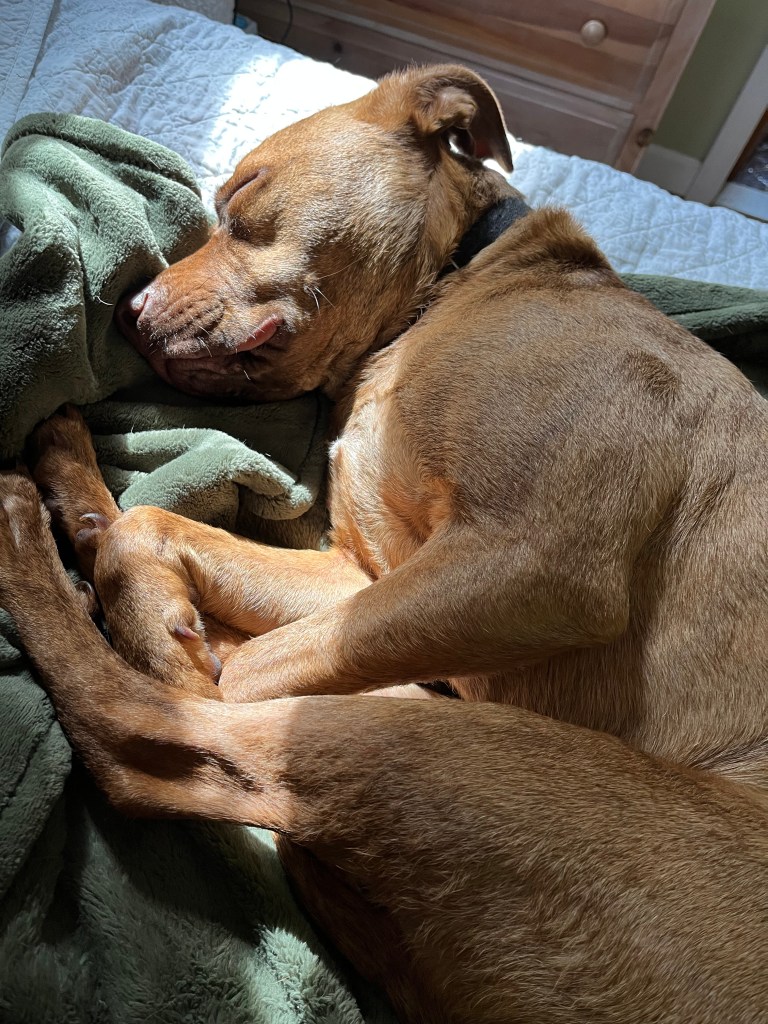
Boundaries Are Everything (except when it comes to personal space..then forget it) When Stanley is done for the day, he’s done. He doesn’t ask for permission to take a nap in a sunny corner of the room. He doesn’t feel guilty about rest. He plays hard and rests harder. Stella, on the other hand, has a clear internal clock. She knows when it’s time to pause and when it’s time to move. Lesson learned: rest is productive. Recharge like your well-being depends on it — because it does.
No Overthinking Allowed (this is a big one, guys!) Dogs don’t spiral. They don’t get imposter syndrome or anxiety over what someone meant by “see you soon,” or “k.” They show up exactly as they are. Stella walks into a room like she owns it (and let’s be real, she does). That kind of confidence is contagious. She teaches me to stop second-guessing and start trusting my gut.
Here’s another life lesson…sometimes when someone says “k” or “see you soon” that’s all it means. Nothing else…just acknowledgement. Let’s try to keep that in check. We don’t have to overanalyze every. single. thing. Dogs sure don’t!
Consistency Is Queen (and King) Walks, meals, treats, and bedtime routines — dogs thrive on structure. And when I stick to a rhythm with them, I thrive too. They’ve taught me that consistency doesn’t mean boring; it means steady growth, predictable peace, and sustainable habits. Showing up daily (even for a walk around the block) is more powerful than waiting for the “perfect” moment.
So,What If We Took a Page from Their Playbook?
Stanley and Stella don’t need apps, calendars, or vision boards. They just need love, movement, rest, and purpose. And maybe some peanut butter. They remind me that being present, showing love, setting boundaries, trusting myself, minding my business, and staying consistent are more than just life lessons — they’re a lifestyle.
My final lesson today? Technically, I’m the one holding the leash—but when it comes to life lessons, they’re leading the pack. 😉
Make Moves, Live Boldly!
Denise xo
**Got a furry life coach of your own? Drop their name and best lesson below!
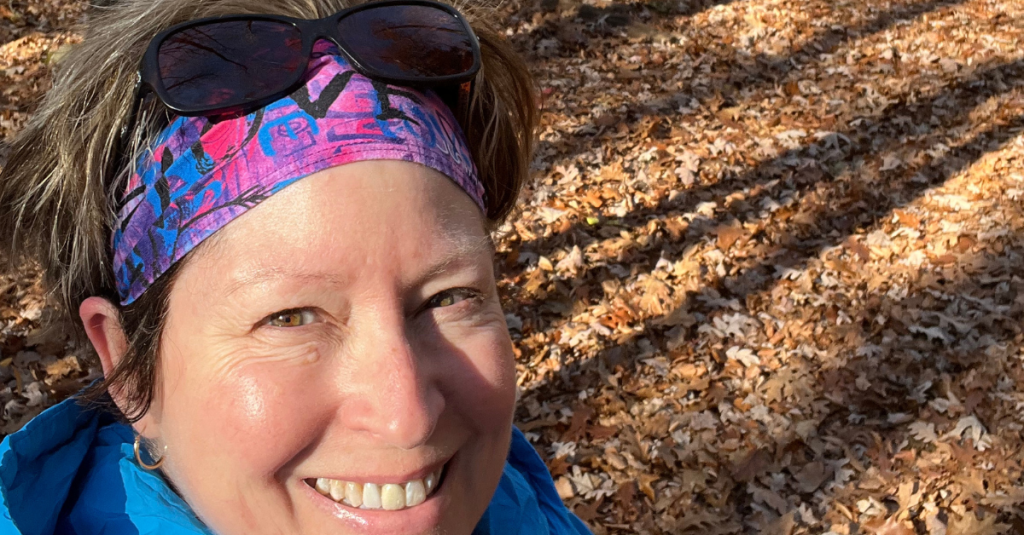
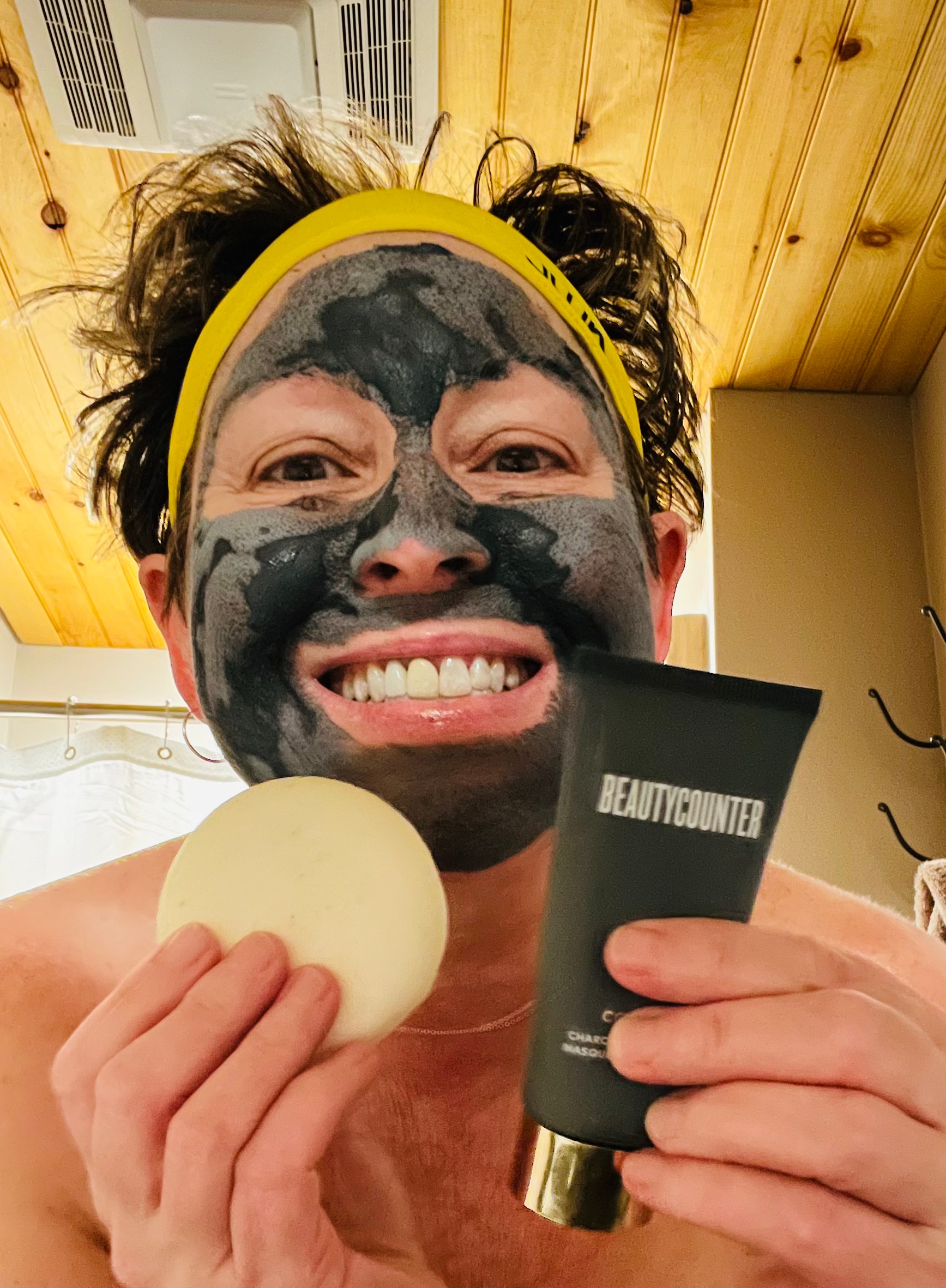
January 1st started like any other day. I was out on the trails — doing what I love — feeling strong, hopeful, and excited about everything I had planned for the new year. I was having fun, taking selfies, showing off some of my favorite skincare, soaking in the fresh start that January always seems to bring. In that moment, life felt solid. Safe. Predictable.
And then, less than 24 hours later, everything changed.
One misstep. One fall. One accident that I never saw coming.
The day after that first picture was taken, I found myself hurt, scared, facing a serious surgery, and unsure of what the next few months — or even the next few days — would look like. Everything I thought I could count on — my routines, my independence, my physical strength — was stripped away in a second.
And when I look back now at the photos side by side, it almost doesn’t feel real. How can life shift so dramatically between one sunrise and the next?
It’s a gut punch reminder that nothing is promised. Not our health. Not our plans. Not even our ability to lace up our shoes and walk out the door.
If you knew your life could change tomorrow, how would you live today? Would you rush through it? Would you waste it on things that don’t matter or people who aren’t worthy of your time or mind space? Would you stay quiet about the dreams that are burning inside you, waiting for the “right” time?
Or would you wake up?
Would you say the thing you’ve been meaning to say? Would you finally take the risk? Would you stop waiting for the “perfect moment” to start living fully? Would you finally start focusing on your health and wellbeing?
I wish I could go back and tell the version of me on January 1st: Savor it. Really, truly savor it. Laugh harder. Hug tighter. Trust your strength, but also respect how fragile this life is.
But since I can’t go back, I can only move forward — differently. Wiser. Softer. More awake to the small, beautiful details of every day.
The truth is, life will change. We just don’t get to choose when.
But we do get to choose how we live right now.
And today, I’m choosing gratitude. I’m choosing courage. I’m choosing to live like it could all change tomorrow — because it can.
If you’ve been waiting for a sign to do the thing — this is it. Book the trip. Start the business. Write the book. Lift weights like your life depends on it — because it does. Get outside. Soak in the sun. Chase the moments that make you feel alive. Whatever it is that’s been tugging at your heart, now is the time.
We can’t control what tomorrow brings. But we can choose to live fully today.
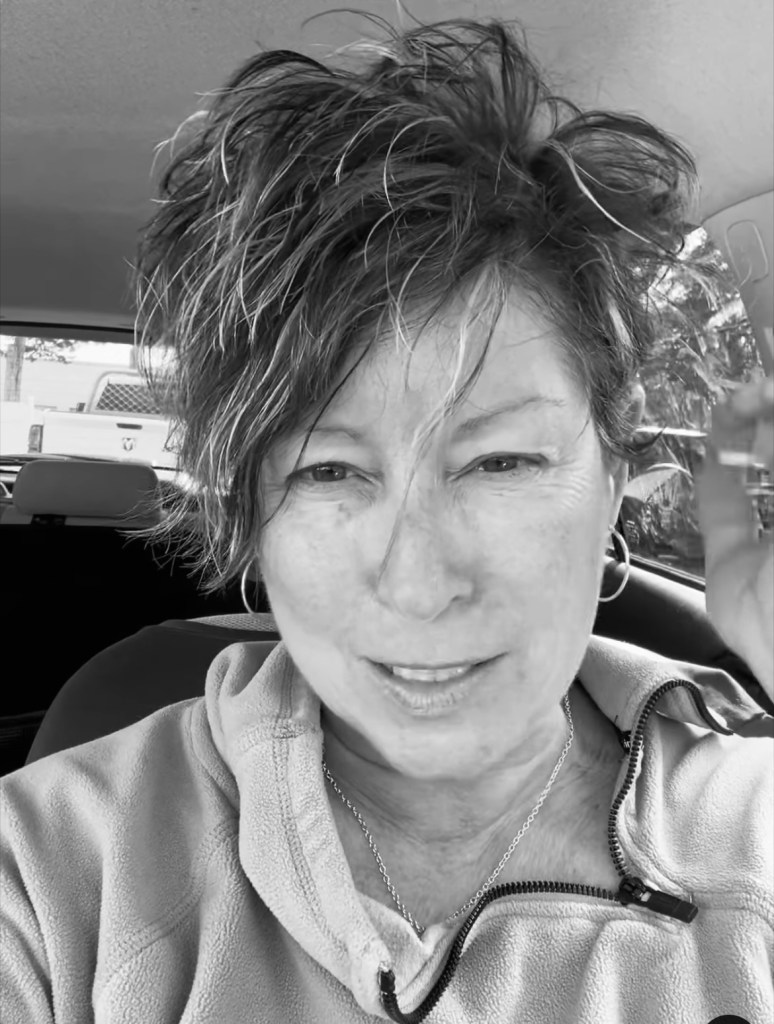
I took these photos on my 60th birthday, just a few short weeks ago. Why? To serve as a reminder—down the road—of who I am today.
Every face tells a story, and I thought I’d share mine… at least up to now.
As I look back and begin to write my story, I know it’s not about being better or worse than anyone else’s—it’s simply mine, just as yours is uniquely yours.
I was born in Chicago, IL, on March 25, 1965. My mother was only 16 years old—a baby herself. She married my father in an attempt to break the cycle of abuse and addiction that she had grown up in.
Unsurprisingly, the marriage didn’t last. They divorced, and my earliest memories are a patchwork of change—new towns, new schools, new faces. My uncle (my mother’s brother) always lived with us and often felt more like a brother than an uncle. He was always fun, but man, could we fight!
We moved a lot in those early years, and while that instability could have left me feeling lost, it sparked a deep resilience instead. I learned to adapt quickly, to read a room, to find my place—or make one—wherever I landed.
I grew up fast. There wasn’t much choice. My mom did the best she could, and I now understand the strength it must have taken just to keep going under the weight of her own unhealed wounds. I didn’t always understand her then, but I have deep compassion for her now.
That’s the thing about wisdom—it softens you. With time and perspective, you begin to see people and situations more clearly, with less judgment and more empathy.
My father died by suicide when I was still young. That kind of loss leaves a scar that never really fades—it just becomes part of who you are. And when I was 46, I lost my mother—she passed away at the age of 63. Far too soon. Losing both parents before I was even 50 left me with a kind of loneliness that’s hard to explain—but it also gave me a greater appreciation for life, for healing, and for showing up fully while we still have the time.
In many ways, my childhood taught me how to survive. But over the years, I’ve worked hard to do more than just survive—I’ve fought to thrive. And with each passing decade, I’ve become more of the woman I needed when I was a girl: grounded, self-aware, fiercely protective of my boundaries, and soft where it matters.
Turning 60 felt big—not because of the number, but because of the reflection it invited. These photos aren’t about vanity. They’re about honoring the journey: the laugh lines earned from joy and sorrow, the strength etched into my bones by years of doing the hard inner work, and the beautiful, undeniable truth that aging is a privilege.
I’m not finished writing my story. But now, I know—I’m the author, not just a character reacting to the plot. And I hope this encourages you—whether you’re 26 or 66—to embrace your own becoming. To celebrate the chapters you’ve already lived and to look ahead with hope and optimism to the ones still being written.
Yep, I’m diving in! But don’t worry—it’s all about conversation, not confrontation.
Let me start by asking—remember when no one knew (or cared) which political party you supported? I miss those days. But thanks to the internet and social media, those lines have been blurred forever.
Lately, I’ve noticed a shift on LinkedIn (a platform that I thought for sure would stay out of politics), and if you’ve been there long enough, you might have noticed it too. What was once a platform primarily for professional growth, networking, and industry insights has become increasingly political. Discussions that were once reserved for other social media platforms are now front and center, with political opinions, debates, and even outright arguments filling the feed.
This shift raises some big questions for me: 🔹 How does this impact job seekers who rely on LinkedIn to build their careers? 🔹 Are small business owners and entrepreneurs feeling more (or less) freedom to be authentic—or more pressure to take a stance? 🔹 Are companies making hiring or business decisions based on political beliefs?
This shift got me thinking: Is there a way to have these discussions without damaging personal and professional relationships? Because whether we like it or not, politics is everywhere—our workplaces, social circles, and even family gatherings. And while being informed and engaged is important, the growing polarization has also created deep divisions.
But does it have to be this way? Can we explore political differences without making everything a battleground? I believe we can. And that’s why I’m going all in on this conversation, because it’s as much for me as it is for you.
The Rise of Political Polarization
There’s no denying that political discourse has become more intense. Social media and search engines are designed to amplify opinions, often creating echo chambers where we’re only exposed to perspectives that reinforce our own. Meanwhile, news outlets tailor content to specific ideologies, making it easier than ever to stay within our comfort zones.
Here’s a thought-provoking challenge: Try searching for the same topic as a friend or colleague and compare your results. Chances are, you’ll see different information. That’s not a coincidence—it’s by design. If you’ve seen The Social Dilemma, you know how algorithms shape what we see, subtly influencing our beliefs and interactions. In many ways, we’re all being manipulated—whether we realize it or not.
Check out this short clip (it’s a fascinating documentary worth watching):
But here’s the reality: No two people will ever agree on everything. Expecting complete alignment—whether in politics, religion, or lifestyle choices—is unrealistic. Healthy relationships and societies are built on diverse perspectives and respectful debate, not total agreement.
And here’s another reality: Every time a new political administration takes power, those who didn’t vote for them will inevitably find fault with their decisions. It’s a predictable cycle—one side cheers, the other side critiques. Policies shift, priorities change, and no matter who’s in charge, opposition always finds something to criticize.
Oh, and one more thing—you can’t judge someone’s political beliefs by their appearance or lifestyle. Wearing a flag shirt, driving a certain car, or listening to country music doesn’t automatically place someone in a political box. We need to move past stereotypes and stop making assumptions about people.
We are complex human beings, shaped by diverse experiences and values. While we may lean one way or the other, few of us align 100% with any party. We hold nuanced opinions, disagree even with “our own side” at times, and make decisions based on more than just political labels. It’s a reminder that real conversations—not assumptions—are what truly help us understand one another.
Why Losing Relationships Over Politics Isn’t Worth It
At the end of the day, our relationships—whether personal or professional—are built on much more than political views. Shared experiences, mutual support, and personal history should matter more than a difference in voting decisions.
Ask yourself: ✅ Will today’s political debate matter in five years? ✅ Does winning an argument feel better than maintaining a meaningful relationship? ✅ Are you listening to understand, or just waiting to respond?
Of course, some differences are deeply personal, and certain beliefs may feel harder to reconcile. But in most cases, a disagreement doesn’t have to mean the end of a relationship—especially if both people approach the conversation with mutual respect.
How to Be More Tolerant of Different Views
Practice Active Listening – Instead of reacting immediately, take a moment to truly hear the other person’s perspective. Ask questions, seek understanding, and look for common ground.
Recognize That People’s Experiences Shape Their Views (this is HUGE)– Backgrounds, upbringings, and life experiences influence opinions. Understanding someone’s story can help bridge divides.
Agree to Disagree – Not every conversation needs a resolution. Sometimes, the best approach is to acknowledge the difference and move on.
Know When to Walk Away – If a discussion becomes heated or unproductive, it’s okay to change the subject or take a break. Protecting your peace is just as important as expressing your views.
Respect Boundaries – If someone prefers not to discuss politics, honor that. Forcing the conversation rarely leads to positive outcomes.
Lead with Kindness (this should actually be first on the list)– You don’t have to agree with someone to treat them with respect. Kindness and civility go a long way in keeping relationships intact.
Bringing It All Together
Politics may be more visible than ever—especially on platforms like LinkedIn—but it doesn’t have to define our relationships. We can choose to engage with openness, prioritize understanding over division, and remind ourselves that people are more than their political beliefs.
Disagreements are inevitable, but how we handle them is a choice. By focusing on respect, listening, and the bigger picture, we can create healthier conversations and, more importantly, stronger relationships—both online and offline.
💬 What do you think? Have you found ways to share political differences while maintaining important relationships? Let’s talk about it below!
As a small business owner who knows a lot of entrepreneurs and fellow business owners, I’ve always admired the hustle it takes to build something from the ground up. But recently, I had a humbling realization—I never really thought about the people behind the scenes, doing the work that many wouldn’t even consider a business.
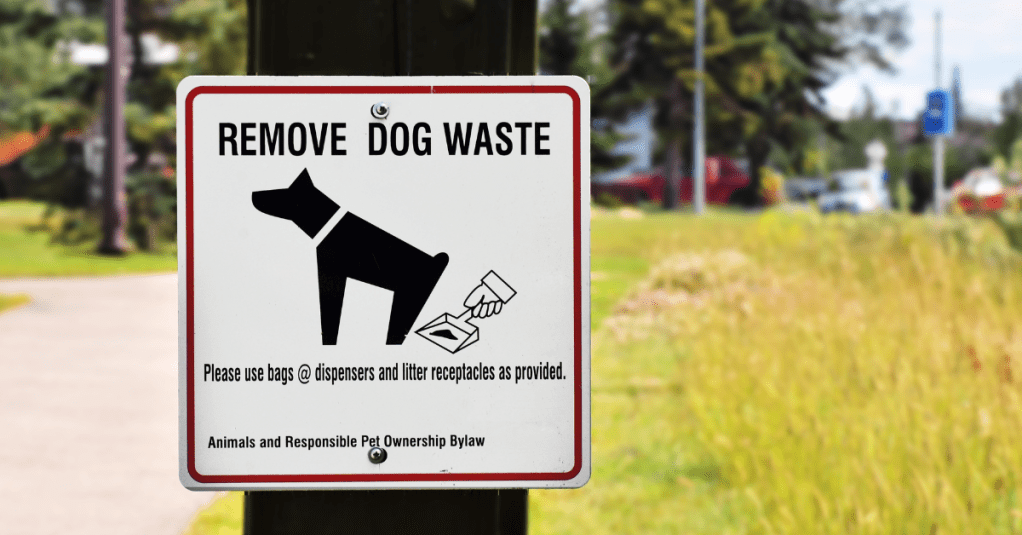
While recovering from ankle surgery, I needed help with a not-so-glamorous task—removing dog waste from my yard. Let’s be real: most people wouldn’t jump at the chance to do that job. But I found a guy who not only runs a dog waste removal business but also trims trees on the side. This is definitely not something I’ve thought about in the entrepreneurial realm, but “John” is absolutely an entrepreneur who is building a successful business with extreme pride, humility, and a great sense of humor! And guess what? He’s making serious money.
It got me thinking about how we often dismiss certain jobs as “beneath” us or unworthy of consideration. We assume that success only comes in sleek offices, high-profile careers, or trending side hustles. But the reality? Some of the most successful businesses are built on the jobs that many wouldn’t even consider.
Here’s a great quote from Mike Rowe, the host of Dirty Jobs, who has spent years highlighting hardworking entrepreneurs who built successful businesses from labor-intensive work:
“Happiness does not come from a job. It comes from knowing what you truly value and behaving in a way that’s consistent with those beliefs.”– Mike Rowe
Think about it—trash collection, cleaning services, mobile car detailing, power washing. These aren’t jobs people dream about as kids, but they are industries where entrepreneurs are thriving, building wealth, and creating legacies.
The moral of the story? Don’t be too quick to turn our nose up at an opportunity. The thing we think is “too small” or “not worth it” might just be someone else’s path to financial freedom. The key isn’t what we do—it’s how well we do it, how we scale it, and how we serve a need.
So before dismissing a side hustle as “not good enough,” remember: someone out there is making a killing doing it. And they’re laughing all the way to the bank.
Do you have an idea of something you’d like to turn into a side hustle? Let’s talk about it in the comments!
Have you ever been the target of a narcissist? If so, you know the mental gymnastics, the manipulation, and the relentless toxicity that come with it. If you haven’t—consider yourself lucky.
It wasn’t until later in my adult life and career that a narcissist quietly infiltrated my world. My narcissist disguised themselves as good, pure, loving, and honorable—a true chameleon. At first, it was all rainbows and butterflies—until, suddenly, I had no idea what hit me.
My fight-or-flight instinct kicked in, but instead of running, I looked around at others, who seemed fine, and thought, “It must be me.” (Ugh…a home run for the narcissist.)
The ironic part? The moment I started confiding in friends and family, they immediately said, “You’re dealing with a narcissist.” It wasn’t one big, obvious event—it was a slow, calculated unraveling. A series of tiny, almost imperceptible manipulations that built the foundation for something far more damaging.
Fortunately for me, our relationship ended abruptly. At first, I was in shock. But with time—and a lot of self-reflection—I finally felt something I hadn’t in a long time: I could breathe again.Really breathe.
I was recently talking to a friend about the crushing grip narcissists have on their victims and the slow surrender we unknowingly give them. It’s a psychological game—one designed to strip away your confidence and leave you questioning your reality. And escaping? That’s another battle entirely for so many.
Breaking free from a narcissist feels like emerging from a cult-like trance—your identity shaken to its core. Thank goodness for the self-help section on Amazon, podcasts, and therapy, right?!
The Narcissist’s Playbook: A Masterclass in Manipulation
At first, they charm you (This is known as the honeymoon phase.). They praise your work, admire your talents, and build you up—only to slowly chip away at your confidence. The gaslighting is subtle at first:
🌀 “I never said that.” (They did.) 🌀 “I’m sorry you feel that way.” (Zero accountability.) 🌀 “I’ve done so much for you, and it’s not appreciated.” (Lies.)
Before you know it, you’re walking on eggshells, second-guessing yourself, and questioning truths you once knew. That’s the toxicity of a narcissist—they LITERALLY rewrite reality to serve their ego.
The Fallout: Breaking Free from the Cycle
Realizing you’re in a narcissist’s grip feels like waking up from a nightmare you didn’t know you were trapped in. You start seeing the patterns, the control, the meanness, the manipulation—but getting out? That’s where the real fight begins, especially for those married to one (for the sake of my husband, I want to clarify that I’m not referring to him here).
Narcissists don’t let go easily. They crave control. They twist narratives, spread lies, and play the victim to maintain their power. And when you finally break free? They’ll do everything in their power to paint you as the villain.
The Lesson: Reclaiming Your Power
Here’s the good news—you learn. You recognize the red flags sooner. You set boundaries quicker and stronger. And most importantly, you take back your power!
If you’ve been through this, you’re not alone. The scars narcissists leave behind are real, but they’re also proof that you survived.
Want to Outsmart a Narcissist? Listen to This.
Mel Robbins has hosted remarkable guests who break down the psychology of narcissists—and, more importantly, how to break free from their grip. If you haven’t listened to “Outsmart a Narcissist: A Proven 4-Step Plan to Take Your Power Back,“ it’s a must, so grab your 🎧 headphones and listen with intention and purpose.
I listened to it on a hike—the place I go to find clarity. I’d love to know what you think after you listen to the full episode.
Have you ever dealt with a narcissist? Drop a comment or share your experience—because the more we talk about it, the more we reclaim our power, and the more we help others.
Make moves, live boldly!
2 responses to “Surviving a Narcissist: The Toxicity, The Chaos, and The Lessons”
Anonymous
You nailed it! Thanks for sharing and reminding us to assess all relationships. Life’s too short to spend time with the wrong people.
Thank you so much for reading my post, and I’m glad it resonated with you. For people who haven’t experienced this behavior it can take some time to realize what is happening in the relationship.









Leave a Reply