Tag: Wellness

  • Men’s Mental Health Matters—Let’s Talk About It

    June is Men’s Mental Health Month, and this message has been sitting on my heart all month. I’ve put off writing it—maybe because it’s deeply personal, maybe because it’s hard to find the words. But I didn’t want the month to end without sharing.

    This isn’t expert advice. This is just a daughter and a cousin speaking from experience.

    I lost two incredible men in my life to suicide—my father and my cousin. Two lives gone far too soon, both in silence.

    These losses cracked me open. But they also opened my eyes.


    The Silent Struggle

    Men are often raised with the belief that showing emotion is weakness—that strength means silence and vulnerability is shameful. This quiet conditioning is dangerous.

    According to the CDC, men die by suicide nearly four times more often than women. And yet, so many of them suffer in silence—carrying stress, pain, trauma, and pressure with nowhere to put it.

    As women, we’re often the emotional anchors in our families and communities. But are we truly seeing the men in our lives? Are we creating safe, judgment-free spaces for them to speak, cry, or just be human?


    What We Can Do

    We can’t fix everything—but we can start by being more aware, more compassionate, and more willing to hold space.

    Here are a few simple, powerful ways to support the men around us:

    • Ask twice. If a man says he’s “fine,” gently ask again.
    • Model emotional expression. Share openly—it gives others permission to do the same.
    • Resist the urge to fix. Sometimes, presence matters more than solutions.
    • Encourage therapy and self-care as ongoing support, not just crisis tools.
    • Speak life into them. Affirm their worth, even when they don’t show they need it.
    • Support healthy male friendships and encourage connection through nature, fitness, or community.

    Where Wellness Meets Mental Health

    Mental health doesn’t stand alone—it’s woven into every part of our well-being. What we eat, how we sleep, how our bodies recover and regulate hormones… it all matters. Especially for men, who are often expected to just “push through.”

    That’s why I take a whole-person approach to wellness. Because men need support for their minds and their bodies.

    One of the tools I’ve seen make a real difference—especially for men—is bioactive precision peptides. These naturally occurring protein messengers help the body heal, regulate, and restore itself at a cellular level.

    Here’s how they can support men’s mental and physical wellness:

    • Hormone balance: Peptides can support healthy testosterone levels, which impacts mood, energy, and drive.
    • Brain clarity: Improved focus, less brain fog, and better emotional resilience.
    • Physical recovery: Faster muscle and joint recovery from workouts—or stress.
    • Deeper sleep: Vital for mental health and nervous system regulation.
    • Longevity: Peptides support cellular repair, immunity, and overall vitality.

    This isn’t about hacks. It’s about giving men the nourishment their bodies and minds need to truly thrive.

    If this speaks to you—or someone you love—I’m offering 10% off peptides this month as a small way to support the men in your life. Sometimes, just introducing them to tools that help them feel better is the spark that changes everything.

    I invite you to explore my Wellness page or shop directly here. As a thank-you for prioritizing your health, I’ll personally send you 10% back on your purchase (before tax). Have questions or want a personalized recommendation? I’m just a message away.


    Resources to Share (and Explore Together)

    Sometimes a book, a podcast, or a shared story can be the bridge to connection or healing. Here are a few worth exploring:

    📚 Books

    • The Mask of Masculinity – Lewis Howes
    • Man Enough: Undefining My Masculinity – Justin Baldoni
    • I Don’t Want to Talk About It – Terrence Real
    • Breaking the Male Code – Dr. Robert Garfield

    🎧 Podcasts

    • The Man Enough Podcast – Honest conversations about masculinity and vulnerability.
    • The Mindful Man Project – Tools and stories for men’s mental wellness.
    • Real Men Feel – Exploring emotional and spiritual wellness for men.
    • On Purpose with Jay Shetty – Purpose-driven insight for all, with episodes centered on men’s issues.

    🧠 Organizations & Support


    My Hope

    I will never stop loving the men I lost. But I will start speaking up more in their honor.

    If you’re a woman reading this, I hope you’ll join me—not just in raising awareness, but in changing how we show up. Let’s ask better questions. Let’s hold space. Let’s help build softer places for the men in our lives to land.

    They deserve to be seen. To be heard. To heal.

    And together—we can help them get there.

    With gratitude,

    Denise xo


    Leave a comment

  • Soft Moments, Strong Heart: My Mental Health Story

    As Mental Health Awareness Month comes to a close, I wanted to take a moment to share something personal I’ve been learning to navigate—social anxiety.

    You might be surprised to hear that from me. I show up, I work hard, I’m driven, I create, I share—and I’m often seen as an extrovert. But behind the highlight reels and daily hustle, there are moments when anxiety creeps in—quietly and powerfully.

    ❗My anxiety has kept me from joining group runs I genuinely wanted to attend.
    ❗It’s made me cancel meetings I’d already prepped for.
    ❗It’s convinced me to skip the gym on days I knew I needed movement.
    ❗It’s even stopped me from nourishing and hydrating my body when I needed it most.

    Social anxiety doesn’t always look like panic—it can look like silence, avoidance, or simply staying small. And if you’ve ever felt that tug-of-war between wanting to show up and feeling frozen by anxiety, you are so not alone.


    The Myth of “All or Nothing”

    One of the biggest lessons I’ve learned is this: life doesn’t have to be all or nothing.
    ♥️ We can go hard and be soft.
    ♥️ We can chase goals and take breaks.
    ♥️ We can lead boldly and still need support.

    I haven’t perfected the balance (who has?), but I’m committed to striving for it daily.


    What’s Helped Me: From “Just Deal With It” to Calm

    For years, I just “dealt with it.” I tried gummies, mild meds, and self-talk that didn’t quite stick. Some days were okay. Some were really hard.

    Then I found Calm—a simple, all-natural powder that dissolves on your tongue and gently takes the edge off, without making me feel foggy or tired. It works with your body, not against it.

    It’s like a warm hug in the middle of chaos. I take it before meetings, workouts, or whenever I need a reset—but my favorite time is in the evening. It’s been a game-changer.

    If you’re navigating stress or social anxiety, I encourage you to explore what works for you. And if you’re curious about Calm—or just want to chat about the real, unfiltered stuff—I’m here.


    Mamas, I See You

    My kids are grown now, but I still remember the pressure that came with summer break—keeping everyone busy, managing the chaos, and trying to hold it all together.

    If the thought of it already has you feeling stretched thin, you’re not alone.

    And if you’re looking for a natural way to stay grounded and ease into the whirlwind of summer, Calm might be exactly what you need.

    A study released this month by Columbia University found that 75% of mothers in the U.S. experience some form of mental or physical health challenge. That stat? It’s real—and it’s a reminder that we need tools and support, not just grit.


    A Few Resources for Social Anxiety

    Because I believe in offering support beyond the scroll, here are a few resources I trust:

    • Anxiety & Depression Association of America (ADAA): adaa.org – Tools, support groups, and therapist directories.
    • Mindfulness Apps: Insight Timer, Headspace, and Calm (the app, not the supplement!) all offer free meditations for anxiety.
    • Books:
      • The Anxiety Toolkit by Dr. Alice Boyes
      • How to Be Yourself by Ellen Hendriksen

    You Are Not Alone

    Mental health isn’t a moment—it’s a movement. Whether you’re feeling on top of the world or struggling to leave the house, your experience is valid.

    Give yourself grace. Ask for help. Explore what balance looks like for you.


    🎁 A Special Gift for My Blog Readers 🎁

    If Calm sounds like the kind of support you’ve been looking for, I’ve got something just for you.

    As a thank-you for being part of this community, when you order Calm through me, I’ll gift you 7 days of Focused—absolutely FREE.

    Why? Because I believe in balance. When we feel calm and clear, we can show up as our best selves—in life, work, and everything in between.

    👉 Click here to place your order. Once it comes through, I’ll personally send Focused your way—no strings, just support, and I’ll cover postage!

    And don’t forget to visit my Wellness page to learn more about the power of bioactive precision peptides and why everyone’s buzzing about them.


    Let’s keep this conversation going—even after May. Because our mental health matters every month. 💚

    Make Moves, Live Boldly!

    Denise xo

    psst…want a great summer recipe? drop the comment “summer salad” and I’ll send it your way!

  • Who’s Training Who? My Dogs Might Be the Real Life Gurus

    I’ve hired and worked with many consultants over the course of my career, taken many leadership training classes, subscribed to podcasts, and read and highlighted pages in some of my favorite personal development books. But it turns out, my best life coaches have been at my side (and under my desk) this whole time. They have four legs, fur, and absolutely no understanding of personal space. NONE.

    Meet Stanley and Stella — my rescue pups, my furry soulmates, and, as I’ve recently realized, my life coaches. They may not have diplomas and degrees, but they’ve got great insight. Their wisdom is simple, consistent, and always delivered with a tail wag…especially when treats are involved.


    Masters of Presence
    Stanley doesn’t care about what happened yesterday. Stella isn’t worried about next Tuesday’s meeting. They are fully present. They remind me to stop overthinking, to notice the breeze on a walk, and to enjoy the moment I’m in. When we’re outside, they’re not scrolling, comparing, or planning. They’re living. That’s a lesson I didn’t know I needed.


    Loyalty and Love, Unfiltered
    There is something grounding about coming home to a pair of dogs who act like you’ve been gone for years, even if it’s only been 20 minutes. I mean, seriously, they lose their minds! Their loyalty is unwavering. They remind me to nurture relationships that feel that steady and supportive. If your people don’t light up when you walk in the room, find the ones who do.


    Boundaries Are Everything (except when it comes to personal space..then forget it)
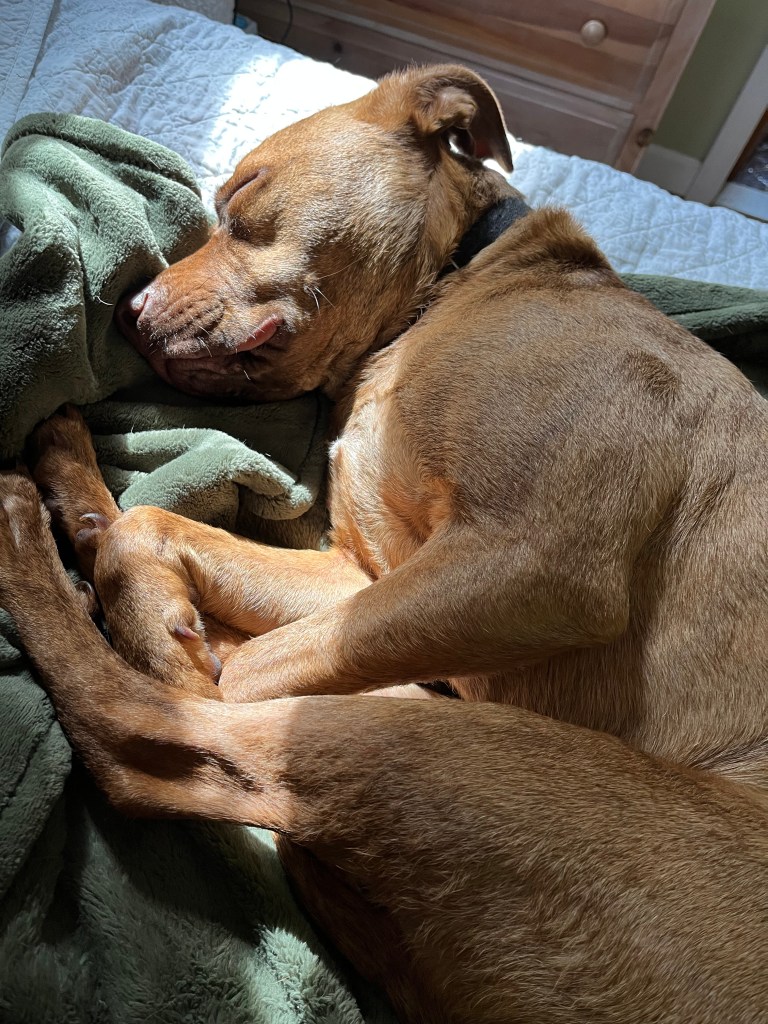
    When Stanley is done for the day, he’s done. He doesn’t ask for permission to take a nap in a sunny corner of the room. He doesn’t feel guilty about rest. He plays hard and rests harder. Stella, on the other hand, has a clear internal clock. She knows when it’s time to pause and when it’s time to move. Lesson learned: rest is productive. Recharge like your well-being depends on it — because it does.


    No Overthinking Allowed (this is a big one, guys!)
    Dogs don’t spiral. They don’t get imposter syndrome or anxiety over what someone meant by “see you soon,” or “k.” They show up exactly as they are. Stella walks into a room like she owns it (and let’s be real, she does). That kind of confidence is contagious. She teaches me to stop second-guessing and start trusting my gut.

    Here’s another life lesson…sometimes when someone says “k” or “see you soon” that’s all it means. Nothing else…just acknowledgement. Let’s try to keep that in check. We don’t have to overanalyze every. single. thing. Dogs sure don’t!


    Consistency Is Queen (and King)
    Walks, meals, treats, and bedtime routines — dogs thrive on structure. And when I stick to a rhythm with them, I thrive too. They’ve taught me that consistency doesn’t mean boring; it means steady growth, predictable peace, and sustainable habits. Showing up daily (even for a walk around the block) is more powerful than waiting for the “perfect” moment.


    So, What If We Took a Page from Their Playbook?

    Stanley and Stella don’t need apps, calendars, or vision boards. They just need love, movement, rest, and purpose. And maybe some peanut butter. They remind me that being present, showing love, setting boundaries, trusting myself, minding my business, and staying consistent are more than just life lessons — they’re a lifestyle.

    My final lesson today? Technically, I’m the one holding the leash—but when it comes to life lessons, they’re leading the pack. 😉

    Make Moves, Live Boldly!

    Denise xo

    **Got a furry life coach of your own? Drop their name and best lesson below!

  • Navigating Menopause with Strength, Grace, and Grit

    Alright, guys… this might be your cue to exit stage left — no hard feelings. 😉

    Now, for the rest of us….
    Let’s talk about something few of us are or were truly prepared for — menopause. It often arrives unannounced and unapologetic, like a full-force shift you never saw coming. It’s physical, emotional, hormonal — and honestly? A little disorienting.

    But here’s the reframe:
    This isn’t just a phase to “get through.” It’s a powerful opportunity to reconnect with our bodies, shift our mindset, and redefine how we show up for ourselves — stronger, more aware, and in control.

    The Phases: What You Didn’t Learn in Health Class (at least not in my health class)

    Menopause isn’t just one moment — it’s a transition that unfolds in stages:

    • Perimenopause (often begins in your 40s): Irregular periods, hot flashes, mood shifts, and sleep disturbances.
    • Menopause (official when you’ve gone 12 months without a period): A hormonal shift that can affect everything from metabolism to brain fog.
    • Postmenopause (after the 12-month mark): Symptoms may ease, but risks like bone density loss and heart health become more relevant.

    The truth? Every body experiences this differently. But you’re not alone — and you don’t have to just “deal with it.” AND, if your doctor tells you to deal with it, run, don’t walk and find a new OBGYN.


    How to Stay Strong (Even When You Don’t Feel Like It)

    Menopause can feel like your body is working against you. Fatigue, weight gain, muscle loss — all real. But here’s the empowering truth: you can take back control with doable, consistent habits that support your strength and vitality.

    Strength Training Is Non-Negotiable

    As estrogen levels drop, muscle mass and bone density decline — making resistance training essential. Lifting weights 2–4 times per week helps:

    • Boost metabolism
    • Support joint and bone health
    • Improve mood and cognitive function

    You don’t need a fancy gym. Dumbbells, resistance bands, or even bodyweight circuits can build major strength.

    🌿 Check out this article in EatingWell Magazine, “The #1 Habit to Start When You’re in Menopause, According to an OBGYN and a Physical Therapist.”

    Walk Daily… and with a Weighted Vest

    Walking remains one of the most accessible forms of movement — but adding a weighted vest ups the ante:

    • Increases calorie burn
    • Builds bone strength
    • Improves cardiovascular endurance
      It’s also gentle on the joints and a great way to clear your mind.

    Connect with Other Women in This Season

    Menopause isn’t just physical — it’s deeply emotional. Community is medicine. Surrounding yourself with women who get it can:

    • Reduce feelings of isolation
    • Offer tips, resources, and honest conversation
    • Remind you that you’re not in this alone

    Find a circle, group, or even a walking buddy. It matters.

    The Power of Bioactive Peptides

    If you’re looking to support your body from the inside out, bioactive peptides can be a game-changer. They help:

    • Improve collagen production (goodbye joint aches + skin dullness)
    • Weight management the natural way
    • Support lean muscle growth and recovery
    • Regulate inflammation and boost energy
    • Decrease mortality rates of all diseases

    Think of peptides as your secret weapon for navigating this hormonal shift with more ease and vitality. (Head to the Wellness page to learn more about the power of peptides.)


    Final Thoughts: This Isn’t the End — It’s a Reset

    Menopause isn’t something to dread. It’s a powerful rite of passage — a chance to reimagine how you take care of your body, prioritize yourself, and define your next chapter.

    Strong. Powerful. Clear. Connected. That’s the goal.

    And remember: you’re allowed to rewrite the rules on what this season looks like — and feels like.


    🔍 Educational Websites & Tools

    • NAMS (North American Menopause Society)
      Evidence-based info from top menopause experts; find a certified menopause practitioner.
    • My Menoplan
      A symptom-tracking and planning tool built by clinicians to help women navigate perimenopause and menopause.
    • Genev
      Virtual menopause care with health coaches, telehealth, articles, and community forums.

    Make Moves, Live Boldly,

  • If You Knew Tomorrow Would Change Everything, How Would You Live Today?

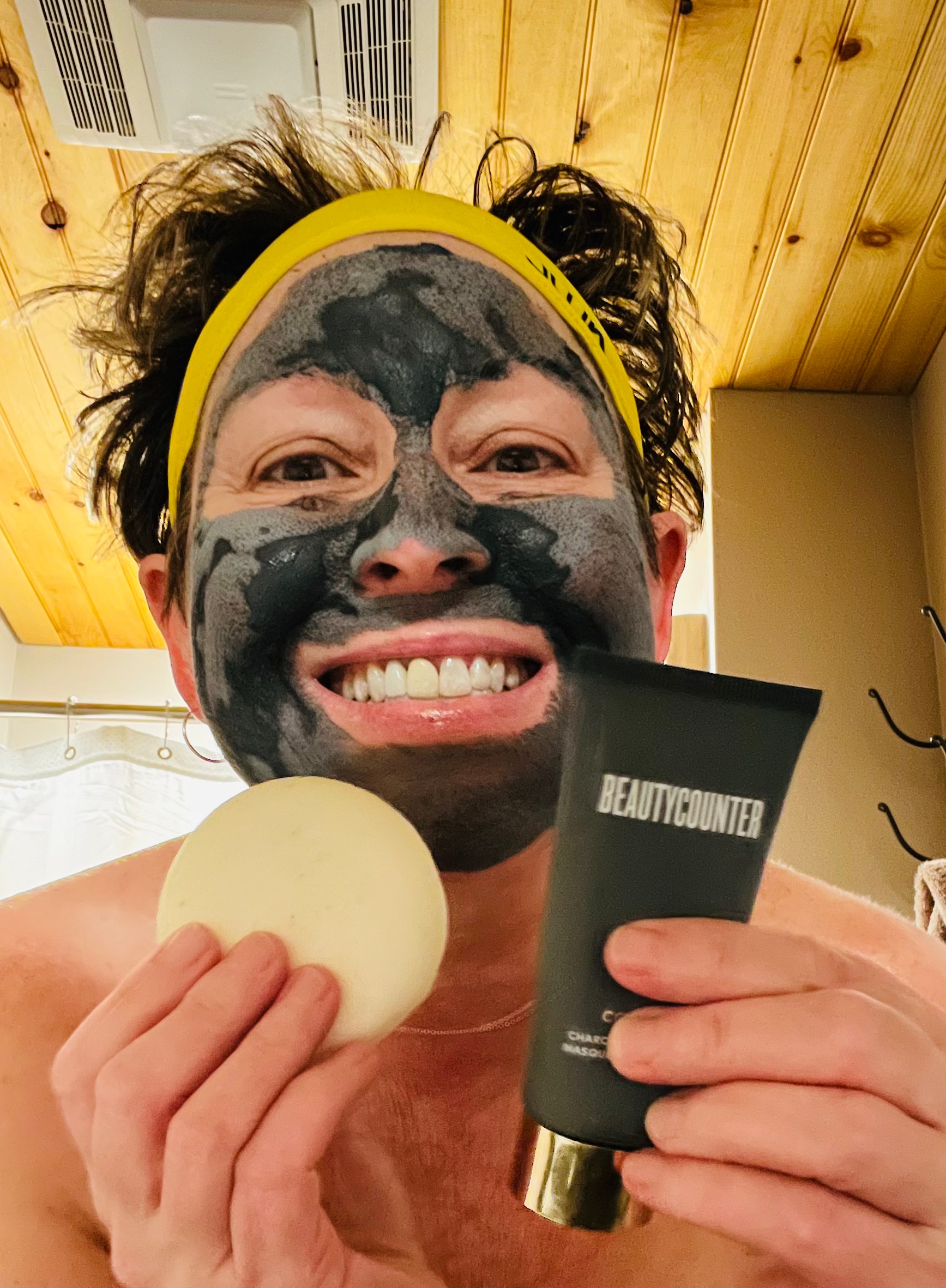
    January 1st started like any other day. I was out on the trails — doing what I love — feeling strong, hopeful, and excited about everything I had planned for the new year. I was having fun, taking selfies, showing off some of my favorite skincare, soaking in the fresh start that January always seems to bring. In that moment, life felt solid. Safe. Predictable.

    And then, less than 24 hours later, everything changed.

    One misstep.
    One fall.
    One accident that I never saw coming.

    The day after that first picture was taken, I found myself hurt, scared, facing a serious surgery, and unsure of what the next few months — or even the next few days — would look like. Everything I thought I could count on — my routines, my independence, my physical strength — was stripped away in a second.

    And when I look back now at the photos side by side, it almost doesn’t feel real. How can life shift so dramatically between one sunrise and the next?

    It’s a gut punch reminder that nothing is promised. Not our health. Not our plans. Not even our ability to lace up our shoes and walk out the door.

    If you knew your life could change tomorrow, how would you live today? Would you rush through it? Would you waste it on things that don’t matter or people who aren’t worthy of your time or mind space? Would you stay quiet about the dreams that are burning inside you, waiting for the “right” time?

    Or would you wake up?

    Would you say the thing you’ve been meaning to say? Would you finally take the risk? Would you stop waiting for the “perfect moment” to start living fully? Would you finally start focusing on your health and wellbeing?

    I wish I could go back and tell the version of me on January 1st:
    Savor it. Really, truly savor it. Laugh harder. Hug tighter. Trust your strength, but also respect how fragile this life is.

    But since I can’t go back, I can only move forward — differently.
    Wiser.
    Softer.
    More awake to the small, beautiful details of every day.

    The truth is, life will change. We just don’t get to choose when.

    But we do get to choose how we live right now.

    And today, I’m choosing gratitude. I’m choosing courage.
    I’m choosing to live like it could all change tomorrow — because it can.

    If you’ve been waiting for a sign to do the thing — this is it.
    Book the trip. Start the business. Write the book. Lift weights like your life depends on it — because it does. Get outside. Soak in the sun. Chase the moments that make you feel alive. Whatever it is that’s been tugging at your heart, now is the time.

    We can’t control what tomorrow brings. But we can choose to live fully today.

    Make Moves, Live Boldly!

  • Our Faces Tell A Story….

    I took these photos on my 60th birthday, just a few short weeks ago. Why? To serve as a reminder—down the road—of who I am today. 

    Every face tells a story, and I thought I’d share mine… at least up to now.

    As I look back and begin to write my story, I know it’s not about being better or worse than anyone else’s—it’s simply mine, just as yours is uniquely yours.

    I was born in Chicago, IL, on March 25, 1965. My mother was only 16 years old—a baby herself. She married my father in an attempt to break the cycle of abuse and addiction that she had grown up in.

    Unsurprisingly, the marriage didn’t last. They divorced, and my earliest memories are a patchwork of change—new towns, new schools, new faces. My uncle (my mother’s brother) always lived with us and often felt more like a brother than an uncle. He was always fun, but man, could we fight!

    We moved a lot in those early years, and while that instability could have left me feeling lost, it sparked a deep resilience instead. I learned to adapt quickly, to read a room, to find my place—or make one—wherever I landed.

    I grew up fast. There wasn’t much choice. My mom did the best she could, and I now understand the strength it must have taken just to keep going under the weight of her own unhealed wounds. I didn’t always understand her then, but I have deep compassion for her now.

    That’s the thing about wisdom—it softens you. With time and perspective, you begin to see people and situations more clearly, with less judgment and more empathy.

    My father died by suicide when I was still young. That kind of loss leaves a scar that never really fades—it just becomes part of who you are. And when I was 46, I lost my mother—she passed away at the age of 63. Far too soon. Losing both parents before I was even 50 left me with a kind of loneliness that’s hard to explain—but it also gave me a greater appreciation for life, for healing, and for showing up fully while we still have the time.

    In many ways, my childhood taught me how to survive. But over the years, I’ve worked hard to do more than just survive—I’ve fought to thrive. And with each passing decade, I’ve become more of the woman I needed when I was a girl: grounded, self-aware, fiercely protective of my boundaries, and soft where it matters.

    Turning 60 felt big—not because of the number, but because of the reflection it invited. These photos aren’t about vanity. They’re about honoring the journey: the laugh lines earned from joy and sorrow, the strength etched into my bones by years of doing the hard inner work, and the beautiful, undeniable truth that aging is a privilege.

    I’m not finished writing my story. But now, I know—I’m the author, not just a character reacting to the plot. And I hope this encourages you—whether you’re 26 or 66—to embrace your own becoming. To celebrate the chapters you’ve already lived and to look ahead with hope and optimism to the ones still being written.

  • The Key to Aging Well: Why Wellness Matters More Than Ever

    Aging is inevitable—but how we age is in our hands. The choices we make today shape how we feel, move, and thrive in the years ahead. I wish I knew at thirty, what I know today, but don’t we all?!

    That’s why I’m deeply passionate about fresh air, strength training, good nutrition, community, and the power of ingestible peptides—five wellness pillars that have transformed my own approach to aging and vitality.

    Wellness as the Foundation for Healthy Aging

    True wellness goes beyond just looking good—it’s about feeling strong, energized, and resilient as we experience life’s stages. Our bodies are constantly changing, and prioritizing wellness isn’t just a luxury—it’s a necessity for successful long-term health.

    The Hidden Danger of Being “Skinny Fat”

    Have you ever heard someone say they don’t need to focus on nutrition or exercise because they’re naturally thin? Many people focus solely on weight when assessing their health, but body composition matters more than the number on the scale. Studies have shown that people with low muscle mass but higher fat percentage—often referred to as “skinny fat”—face increased risks of metabolic disorders, osteoporosis, and early aging (Medical News Today). YES, READ THAT AGAIN!

    This is why strength training and proper nutrition are crucial, not just for aesthetics but for long-term health and longevity.

    Fresh Air: A Natural Reset for Mind and Body

    There’s something deeply rejuvenating about stepping outside, breathing in fresh air, and moving your body. Whether it’s a walk in nature, a morning run, or simply soaking in the sun, fresh air:
    ☀️ Reduces stress and enhances mental clarity
    ☀️ Supports cardiovascular health
    ☀️ Boosts immune function

    Nature has a way of reminding us to slow down, reset, and reconnect with our well-being. Nature’s benefits are highly under utilized in our healthcare system (in my opinion). If you look at other countries, it’s very common to be prescribed 30-60 minutes daily of fresh air, sunshine, and movement. I believe this is an area we can vastly improve upon, so here’s your nudge…grab your sneakers or hiking boots, and get outside!

    Strength Training: The Anti-Aging Secret

    Muscle loss is one of the biggest challenges of aging, but it’s not inevitable. Ladies, this is a big one! Strength training is one of the most powerful ways to preserve muscle, boost metabolism, and protect bone health. Incorporating resistance training into your routine can:
    💪🏼 Increase strength and mobility
    💪🏼 Reduce the risk of injury and osteoporosis
    💪🏼 Support hormone balance and longevity

    Lifting weights isn’t just about aesthetics—it’s about maintaining independence, energy, and resilience as we age. If you don’t know where to start in the gym, hire a trainer/coach.

    **Let me know if you need help, I know a lot of fitness pros who can help you get started, online or in-person.

    Good Nutrition: Fueling Longevity from the Inside Out

    What we eat plays a massive role in how we age. Food isn’t just fuel—it’s information for our cells. A diet rich in whole, nutrient-dense foods can:
    🥗 Support gut health and digestion
    🥗 Provide essential vitamins and minerals for cellular repair
    🥗 Reduce inflammation and slow down aging

    Prioritizing lean proteins (super important), healthy fats, fiber-rich vegetables, and antioxidant-packed foods helps our bodies function optimally, keeping us energized and resilient.

    Ingestible Peptides: A Game-Changer for Cellular Health

    One of the most exciting breakthroughs in wellness is the power of bioactive precision peptides.

    Exciting research is underway exploring how bioactive precision peptides can support cancer patients, as well as individuals with chronic conditions such as autoimmune diseases, metabolic disorders, and neurodegenerative diseases. Scientists are also investigating their potential in areas like gut health, muscle preservation, and overall cellular regeneration.

    These potent compounds support cellular function, helping to:
    🌱 Boost collagen production for skin, hair, and joints
    🌱 Enhance muscle recovery and performance
    🌱 Support weight loss, immune function, and overall vitality

    Since incorporating peptides into my routine, I’ve experienced noticeable changes in my energy, recovery, and overall well-being. I’ve seen firsthand how they help with muscle retention, skin elasticity, and overall resilience—things that become even more important as we age.

    This was one of the biggest reasons why I partnered with the groundbreaking company Make Wellness and launched a business helping others find solutions that are effective, science-backed, plant-based, and affordable. I truly believe that aging well shouldn’t be complicated or expensive—it should be accessible to everyone who wants to feel stronger, healthier, and more vibrant.

    Whether you’re looking to improve athletic recovery, support your skin and joints, or simply feel better in your daily life, these peptides can be a game-changer. If you’re curious about how they work or if they’re right for you, I’d love to share more about my experience!

    Power of Community in Wellness

    Wellness isn’t just about what we eat, how we move, or the supplements we take—it’s also about the people we surround ourselves with. The saying, “you are who you surround yourself with” is absolutely true. Having a strong, supportive community can make all the difference in staying motivated, accountable, and inspired on our health journeys.

    🫶 Encouragement & Support – Being part of a like-minded group can push you to stay consistent and celebrate your wins, no matter how small.
    🫶 Knowledge & Resources – The right community can introduce you to new wellness strategies, expert insights, and shared experiences that help you grow.
    🫶 Connection & Purpose – Feeling connected to others improves mental well-being, reduces stress, and reminds us that we’re not alone in our challenges.

    That’s why I’m so passionate about creating a space where people can come together, share their wellness journeys, and lift each other up. Whether it’s through Make Wellness, Instagram, or my women’s group in Facebook, I love seeing people find strength—not just in their bodies, but in the relationships they build along the way.

    At the end of the day, wellness isn’t just about aging well—it’s about living well, together. Surround yourself with people who inspire you, challenge you, and remind you that you’re capable of incredible things.

    The Bottom Line: Invest in Your Future Self

    Aging doesn’t have to mean decline—it can mean strength, vitality, and longevity. By prioritizing fresh air, strength training, good nutrition, strong communities, and the power of ingestible peptides, we can take control of how we age and live with energy and purpose.

    Wellness is an investment in your future. Are you making yourself a priority today?

  • A Tribute to My Mother on My 60th Birthday

    Sixty years—a milestone that makes me pause and reflect on the journey that has brought me here. As I step into this new decade, my heart is filled with gratitude for the woman who shaped me, guided me, and loved me unconditionally: my mother.

    From my earliest memories, my mother was the constant force in my life. My Northstar. She was my first teacher, my fiercest protector, and my greatest cheerleader. She taught me resilience when times were tough, grace when challenges seemed insurmountable, and kindness as the foundation of every interaction. Her lessons were never just words; they were actions—woven into the fabric of everyday life.

    She showed me what strength looked like—not the loud or boastful kind, but the quiet, unwavering strength that gets up every morning, faces the world with determination, and gives selflessly to others. Whether it was late nights spent tending to me when I was sick, standing by my side during life’s difficult moments, or celebrating every small and big victory, she was always there.

    My mother’s love was never conditional. It was steady, enduring, and boundless. She had an incredible way of making me feel that no matter what life threw my way, I would be okay because I had her belief in me. And that belief? It became the foundation for my own self-confidence, for the courage to chase my dreams, and for the wisdom to navigate life’s twists and turns.

    Now, at sixty, I look back and realize how much of her is in me. The values she instilled, the love she gave, and the sacrifices she made—they are all etched into the person I have become. And though time has passed, her presence in my life remains just as strong, whether in memories, in the values I carry forward, or in the way I love those around me.

    So this week, as I celebrate this milestone, I dedicate it to my mother. To her love, her lessons, and her legacy. Because without her, I would not be the person I am today. And for that, I am forever grateful.

    Here’s to you, Mom—my guiding light, my heart, my home. Thank you for everything.


    Let’s Connect!

  • Surviving a Narcissist: The Toxicity, The Chaos, and The Lessons

    Have you ever been the target of a narcissist? If so, you know the mental gymnastics, the manipulation, and the relentless toxicity that come with it. If you haven’t—consider yourself lucky.

    It wasn’t until later in my adult life and career that a narcissist quietly infiltrated my world. My narcissist disguised themselves as good, pure, loving, and honorable—a true chameleon. At first, it was all rainbows and butterflies—until, suddenly, I had no idea what hit me.

    My fight-or-flight instinct kicked in, but instead of running, I looked around at others, who seemed fine, and thought, “It must be me.” (Ugh…a home run for the narcissist.)

    The ironic part? The moment I started confiding in friends and family, they immediately said, “You’re dealing with a narcissist.” It wasn’t one big, obvious event—it was a slow, calculated unraveling. A series of tiny, almost imperceptible manipulations that built the foundation for something far more damaging.

    Fortunately for me, our relationship ended abruptly. At first, I was in shock. But with time—and a lot of self-reflection—I finally felt something I hadn’t in a long time: I could breathe again. Really breathe.

    I was recently talking to a friend about the crushing grip narcissists have on their victims and the slow surrender we unknowingly give them. It’s a psychological game—one designed to strip away your confidence and leave you questioning your reality. And escaping? That’s another battle entirely for so many.

    Breaking free from a narcissist feels like emerging from a cult-like trance—your identity shaken to its core. Thank goodness for the self-help section on Amazon, podcasts, and therapy, right?!

    The Narcissist’s Playbook: A Masterclass in Manipulation

    At first, they charm you (This is known as the honeymoon phase.). They praise your work, admire your talents, and build you up—only to slowly chip away at your confidence. The gaslighting is subtle at first:

    🌀 “I never said that.” (They did.)
    🌀 “I’m sorry you feel that way.” (Zero accountability.)
    🌀 “I’ve done so much for you, and it’s not appreciated.” (Lies.)

    Before you know it, you’re walking on eggshells, second-guessing yourself, and questioning truths you once knew. That’s the toxicity of a narcissist—they LITERALLY rewrite reality to serve their ego.

    The Fallout: Breaking Free from the Cycle

    Realizing you’re in a narcissist’s grip feels like waking up from a nightmare you didn’t know you were trapped in. You start seeing the patterns, the control, the meanness, the manipulation—but getting out? That’s where the real fight begins, especially for those married to one (for the sake of my husband, I want to clarify that I’m not referring to him here).

    Narcissists don’t let go easily. They crave control. They twist narratives, spread lies, and play the victim to maintain their power. And when you finally break free? They’ll do everything in their power to paint you as the villain.

    The Lesson: Reclaiming Your Power

    Here’s the good news—you learn. You recognize the red flags sooner. You set boundaries quicker and stronger. And most importantly, you take back your power!

    If you’ve been through this, you’re not alone. The scars narcissists leave behind are real, but they’re also proof that you survived.

    Want to Outsmart a Narcissist? Listen to This.

    Mel Robbins has hosted remarkable guests who break down the psychology of narcissists—and, more importantly, how to break free from their grip. If you haven’t listened to Outsmart a Narcissist: A Proven 4-Step Plan to Take Your Power Back, it’s a must, so grab your 🎧 headphones and listen with intention and purpose.

    I listened to it on a hike—the place I go to find clarity. I’d love to know what you think after you listen to the full episode.

    For anyone who needs some tips and strategies, I’m including a great resource I found from The Counseling Center Group. Here is “How to Handle a Narcissist: 8 Effective Strategies For Self-Care.

    Have you ever dealt with a narcissist? Drop a comment or share your experience—because the more we talk about it, the more we reclaim our power, and the more we help others.

    Make moves, live boldly!


    2 responses to “Surviving a Narcissist: The Toxicity, The Chaos, and The Lessons”

    1.  Avatar
      Anonymous

      You nailed it! Thanks for sharing and reminding us to assess all relationships. Life’s too short to spend time with the wrong people.

      Like

      1. Denise Irving Avatar

        Thank you so much for reading my post, and I’m glad it resonated with you. For people who haven’t experienced this behavior it can take some time to realize what is happening in the relationship.

        Assessing all relationship is spot on!

        Like

    Leave a comment

  • Navigating a Fast World on a Slow Path

    I was chatting with a friend and mentioned I was having a tough day. After listening, she encouraged me to write about it. So, her push for me to be open and honest led to this post—a raw reflection of my frustration and reality.

    I never imagined a shattered ankle would be my wake-up call, but life has a way of delivering unexpected lessons. One moment, I was moving effortlessly through my days; the next, I was sidelined, kicked out of my active lifestyle—grappling with anxiety, depression, relying on others for the smallest of tasks, and adjusting to life with a walker, knee scooter, and boot. Suddenly, I was forced to see the world through a completely different lens, confronting the daily frustrations of a society that isn’t designed for those with mobility challenges.

    Imagine going from living independently to carefully strategizing how to get in and out of your own home. Let me tell ya, it sucks! Simple movements become calculated efforts, and every outing feels like an obstacle course. It’s a humbling shift that opened my eyes to struggles so many people face—struggles often invisible in a world built for speed and convenience.

    From the moment I left the hospital, one truth became painfully clear: our society prioritizes efficiency and accessibility, but only for the able-bodied.

    The simplest tasks—getting through a doorway, maneuvering through a store, getting in and out of cars, climbing stairs, cooking, or even navigating sidewalks—become daunting obstacles. True resilience isn’t just about physical strength; it’s about adapting, problem-solving, and pushing forward in a world that often isn’t built for everyone.

    The Everyday Struggles We Don’t See

    Before my injury, I never noticed how difficult it was to find a ramp that wasn’t blocked or how hard it was to navigate a crowded space without feeling like an inconvenience. Now, I have no choice but to experience it firsthand. Doors without automatic openers, uneven sidewalks, narrow aisles, inaccessible bathrooms—barriers I had overlooked were now glaringly obvious.

    I find myself exhausted, not just from the physical strain of getting around, but from the constant mental calculations required to do basic things. And if I, someone with a temporary injury, feel this way, what about those who face these challenges every single day?

    The Fight to Live Fully

    The real flex…despite these obstacles, people with disabilities courageously push forward, building careers, chasing dreams, and making an impact—all while navigating a world that often forgets them. Their perseverance isn’t just inspiring; it’s a testament to the human spirit.

    But should it be this hard? Should people have to fight this much just to live a fulfilling life? Absolutely NOT!

    Slowing Down and Showing Up

    This experience has made me more aware, compassionate, and determined to do better moving forward. Accessibility isn’t just about ramps and wider doorways—it’s about mindset. It’s about slowing down long enough to notice who is being left behind and taking action.

    So, let’s pause. Let’s take an extra few seconds to hold a door, clear a path, offer assistance, or simply acknowledge that not everyone can keep up with the chaotic pace of the world.

    Because if life is moving too fast for us to extend a hand, maybe it’s time to rethink the way we’re moving altogether.

    True progress isn’t just about innovation, but inclusion. The burden of accessibility shouldn’t fall solely on those who struggle—it should be a shared responsibility. If we all take small steps toward awareness and action, we can create a world where no one feels like an afterthought.

    I found this great article: 15 Ways to Show Kindness to People with Disabilities—it offers small but meaningful ways to make a difference. Because the goal isn’t just to help people get by; it’s to empower them to excel.

    As I close, the question I will ask myself as I slowly begin to get my legs under me again: How can I be a better human and help those individuals not just get by, but truly thrive?

    I’d love to hear your thoughts. Drop a comment, and let’s talk!👇🏼


    Leave a comment