I was creating content for my marketing business when I found myself diving into a topic that’s been on my mind for a while: ghosting. Not the dating kind, but the kind that happens in business and life, when someone simply disappears instead of responding, following up, or having the hard conversation.
It struck me that this is something we don’t talk about enough, especially as entrepreneurs, leaders, and professionals navigating fast-paced, emotionally charged spaces. So I thought I’d dive in here and open the door for thought and conversation.
The Real Problem with Ghosting
We live in a culture of instant gratification and constant notifications, but ghosting has become alarmingly normalized. However, what may feel like an “easy out” in the moment actually causes long-term harm.
When you ghost someone, whether it’s a potential client, business partner, vendor, or even a friend, you’re not just avoiding discomfort. You’re sending a message (whether you realize it or not) that their time, effort, or relationship wasn’t worth a response.
And trust me, that message sticks.
Why It Matters in Business
Business is personal. Relationships are the currency of any business, and the way we show up, or don’t, directly impacts our reputation and personal brand.
Whether you’re saying “yes,” “no,” or “not right now,” clarity is a form of respect. People remember how you communicate when things aren’t easy more than they remember the smooth moments.
Here’s what happens when we DON’T ghost:
We build trust, even when we say no.
We protect our reputation and brand integrity.
We make space for the right opportunities to flow in.
We model healthy boundaries without disappearing.
Why It Matters in Life
Ghosting doesn’t just show up in business. It can show up in friendships, family, and even the way we relate to ourselves. When we get overwhelmed or uncomfortable, it’s tempting to pull back instead of leaning in.
But here’s the truth: Discomfort is not a reason to disappear. It’s a sign to pause, reflect, and communicate with care.
The Bigger Picture: Boundaries ≠ Ghosting
Sometimes we confuse boundaries with avoidance. Setting a boundary might mean declining a project or stepping back from a relationship, but it still involves communication. Ghosting skips that step entirely and leaves people confused, hurt, or doubting their worth.
You don’t need to over-explain or over-justify. A simple response can be both kind and firm.
Try these:
“Thanks for thinking of me, but I’m not available for this opportunity.”
“I need to step away from this relationship, and I wish you well.”
“Right now isn’t the right time for me, but I appreciate your message.”
Let’s Normalize Showing Up
I believe communication is a core part of conscious living and working. We’re not here to ghost our way through the hard parts, but rather we’re here to build something better. That means responding. Being honest. Choosing clarity over comfort.
You don’t have to be perfect. Just present.
Have you ever been ghosted in business, or accidentally ghosted someone yourself? What did you learn from it?
Drop a comment or share this post with someone who values showing up. 💬
I’ve hired and worked with many consultants over the course of my career, taken many leadership training classes, subscribed to podcasts, and read and highlighted pages in some of my favorite personal development books. But it turns out, my best life coaches have been at my side (and under my desk) this whole time. They have four legs, fur, and absolutely no understanding of personal space. NONE.
Meet Stanley and Stella — my rescue pups, my furry soulmates, and, as I’ve recently realized, my life coaches. They may not have diplomas and degrees, but they’ve got great insight. Their wisdom is simple, consistent, and always delivered with a tail wag…especially when treats are involved.
Masters of Presence Stanley doesn’t care about what happened yesterday. Stella isn’t worried about next Tuesday’s meeting. They are fully present. They remind me to stop overthinking, to notice the breeze on a walk, and to enjoy the moment I’m in. When we’re outside, they’re not scrolling, comparing, or planning. They’re living. That’s a lesson I didn’t know I needed.
Loyalty and Love, Unfiltered There is something grounding about coming home to a pair of dogs who act like you’ve been gone for years, even if it’s only been 20 minutes. I mean, seriously, they lose their minds! Their loyalty is unwavering. They remind me to nurture relationships that feel that steady and supportive. If your people don’t light up when you walk in the room, find the ones who do.
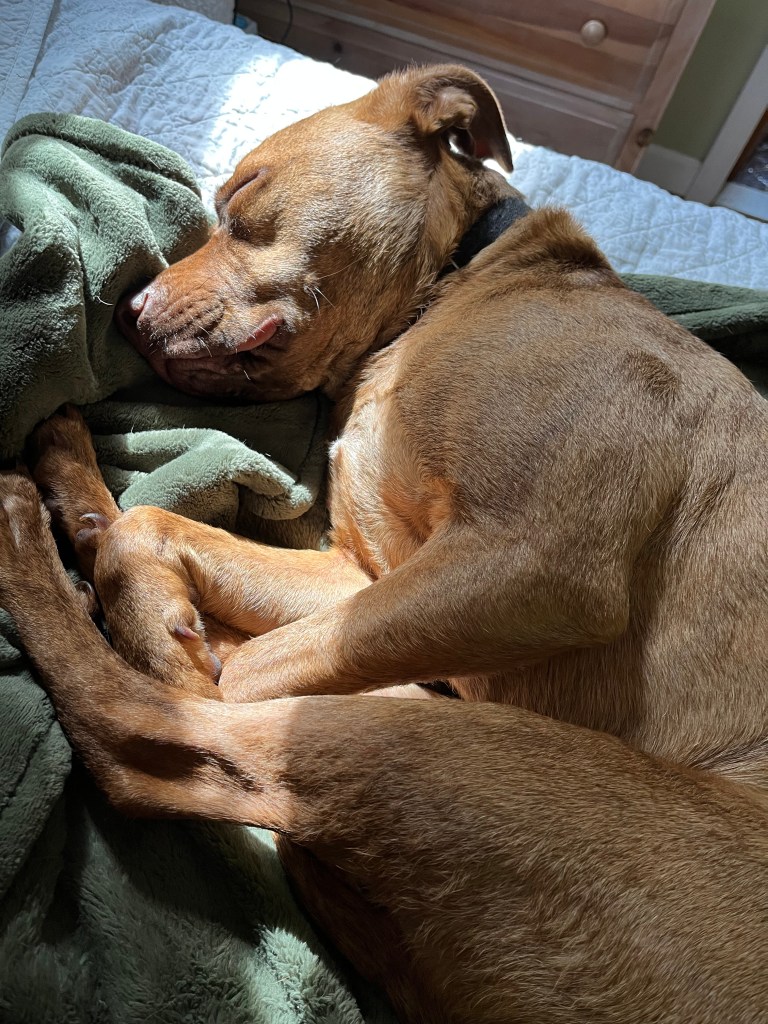
Boundaries Are Everything (except when it comes to personal space..then forget it) When Stanley is done for the day, he’s done. He doesn’t ask for permission to take a nap in a sunny corner of the room. He doesn’t feel guilty about rest. He plays hard and rests harder. Stella, on the other hand, has a clear internal clock. She knows when it’s time to pause and when it’s time to move. Lesson learned: rest is productive. Recharge like your well-being depends on it — because it does.
No Overthinking Allowed (this is a big one, guys!) Dogs don’t spiral. They don’t get imposter syndrome or anxiety over what someone meant by “see you soon,” or “k.” They show up exactly as they are. Stella walks into a room like she owns it (and let’s be real, she does). That kind of confidence is contagious. She teaches me to stop second-guessing and start trusting my gut.
Here’s another life lesson…sometimes when someone says “k” or “see you soon” that’s all it means. Nothing else…just acknowledgement. Let’s try to keep that in check. We don’t have to overanalyze every. single. thing. Dogs sure don’t!
Consistency Is Queen (and King) Walks, meals, treats, and bedtime routines — dogs thrive on structure. And when I stick to a rhythm with them, I thrive too. They’ve taught me that consistency doesn’t mean boring; it means steady growth, predictable peace, and sustainable habits. Showing up daily (even for a walk around the block) is more powerful than waiting for the “perfect” moment.
So,What If We Took a Page from Their Playbook?
Stanley and Stella don’t need apps, calendars, or vision boards. They just need love, movement, rest, and purpose. And maybe some peanut butter. They remind me that being present, showing love, setting boundaries, trusting myself, minding my business, and staying consistent are more than just life lessons — they’re a lifestyle.
My final lesson today? Technically, I’m the one holding the leash—but when it comes to life lessons, they’re leading the pack. 😉
Make Moves, Live Boldly!
Denise xo
**Got a furry life coach of your own? Drop their name and best lesson below!
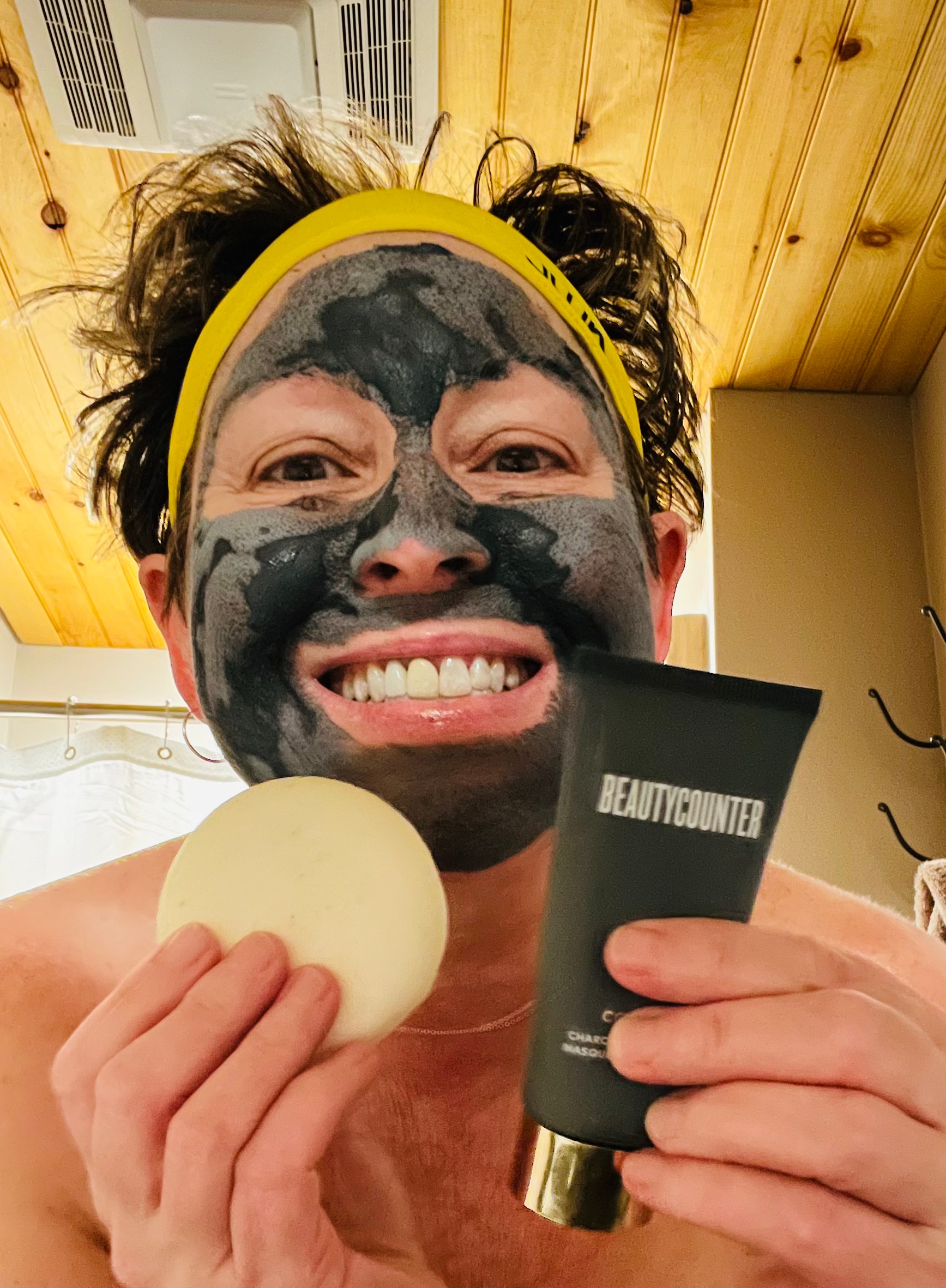
January 1st started like any other day. I was out on the trails — doing what I love — feeling strong, hopeful, and excited about everything I had planned for the new year. I was having fun, taking selfies, showing off some of my favorite skincare, soaking in the fresh start that January always seems to bring. In that moment, life felt solid. Safe. Predictable.
And then, less than 24 hours later, everything changed.
One misstep. One fall. One accident that I never saw coming.
The day after that first picture was taken, I found myself hurt, scared, facing a serious surgery, and unsure of what the next few months — or even the next few days — would look like. Everything I thought I could count on — my routines, my independence, my physical strength — was stripped away in a second.
And when I look back now at the photos side by side, it almost doesn’t feel real. How can life shift so dramatically between one sunrise and the next?
It’s a gut punch reminder that nothing is promised. Not our health. Not our plans. Not even our ability to lace up our shoes and walk out the door.
If you knew your life could change tomorrow, how would you live today? Would you rush through it? Would you waste it on things that don’t matter or people who aren’t worthy of your time or mind space? Would you stay quiet about the dreams that are burning inside you, waiting for the “right” time?
Or would you wake up?
Would you say the thing you’ve been meaning to say? Would you finally take the risk? Would you stop waiting for the “perfect moment” to start living fully? Would you finally start focusing on your health and wellbeing?
I wish I could go back and tell the version of me on January 1st: Savor it. Really, truly savor it. Laugh harder. Hug tighter. Trust your strength, but also respect how fragile this life is.
But since I can’t go back, I can only move forward — differently. Wiser. Softer. More awake to the small, beautiful details of every day.
The truth is, life will change. We just don’t get to choose when.
But we do get to choose how we live right now.
And today, I’m choosing gratitude. I’m choosing courage. I’m choosing to live like it could all change tomorrow — because it can.
If you’ve been waiting for a sign to do the thing — this is it. Book the trip. Start the business. Write the book. Lift weights like your life depends on it — because it does. Get outside. Soak in the sun. Chase the moments that make you feel alive. Whatever it is that’s been tugging at your heart, now is the time.
We can’t control what tomorrow brings. But we can choose to live fully today.
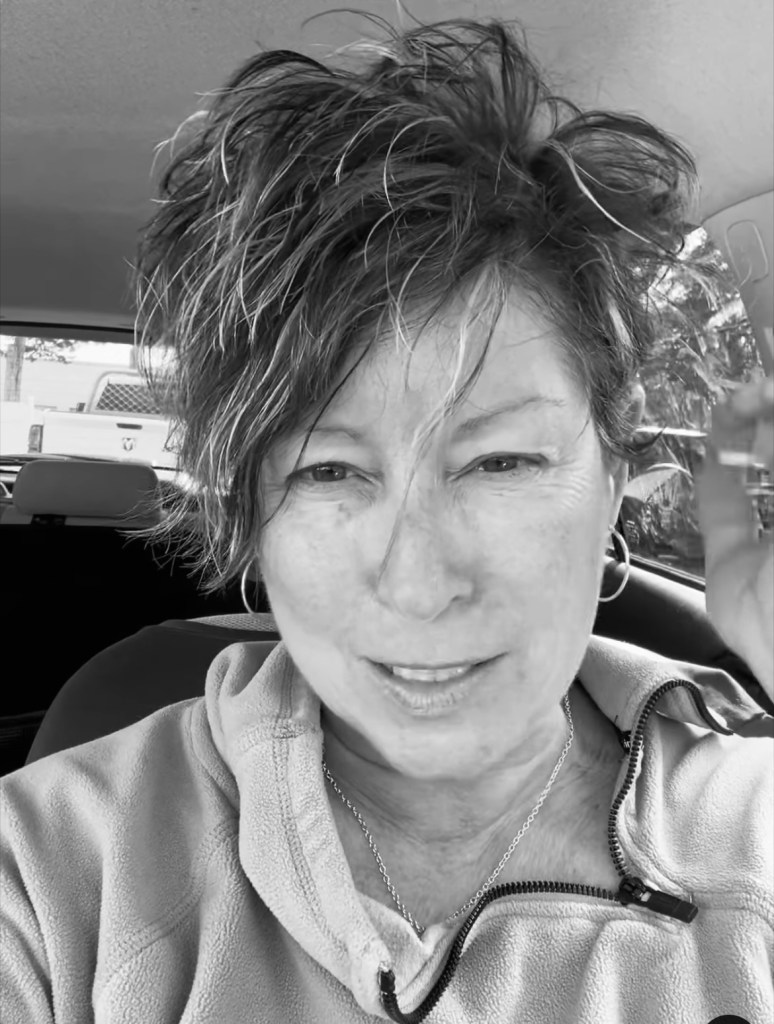
I took these photos on my 60th birthday, just a few short weeks ago. Why? To serve as a reminder—down the road—of who I am today.
Every face tells a story, and I thought I’d share mine… at least up to now.
As I look back and begin to write my story, I know it’s not about being better or worse than anyone else’s—it’s simply mine, just as yours is uniquely yours.
I was born in Chicago, IL, on March 25, 1965. My mother was only 16 years old—a baby herself. She married my father in an attempt to break the cycle of abuse and addiction that she had grown up in.
Unsurprisingly, the marriage didn’t last. They divorced, and my earliest memories are a patchwork of change—new towns, new schools, new faces. My uncle (my mother’s brother) always lived with us and often felt more like a brother than an uncle. He was always fun, but man, could we fight!
We moved a lot in those early years, and while that instability could have left me feeling lost, it sparked a deep resilience instead. I learned to adapt quickly, to read a room, to find my place—or make one—wherever I landed.
I grew up fast. There wasn’t much choice. My mom did the best she could, and I now understand the strength it must have taken just to keep going under the weight of her own unhealed wounds. I didn’t always understand her then, but I have deep compassion for her now.
That’s the thing about wisdom—it softens you. With time and perspective, you begin to see people and situations more clearly, with less judgment and more empathy.
My father died by suicide when I was still young. That kind of loss leaves a scar that never really fades—it just becomes part of who you are. And when I was 46, I lost my mother—she passed away at the age of 63. Far too soon. Losing both parents before I was even 50 left me with a kind of loneliness that’s hard to explain—but it also gave me a greater appreciation for life, for healing, and for showing up fully while we still have the time.
In many ways, my childhood taught me how to survive. But over the years, I’ve worked hard to do more than just survive—I’ve fought to thrive. And with each passing decade, I’ve become more of the woman I needed when I was a girl: grounded, self-aware, fiercely protective of my boundaries, and soft where it matters.
Turning 60 felt big—not because of the number, but because of the reflection it invited. These photos aren’t about vanity. They’re about honoring the journey: the laugh lines earned from joy and sorrow, the strength etched into my bones by years of doing the hard inner work, and the beautiful, undeniable truth that aging is a privilege.
I’m not finished writing my story. But now, I know—I’m the author, not just a character reacting to the plot. And I hope this encourages you—whether you’re 26 or 66—to embrace your own becoming. To celebrate the chapters you’ve already lived and to look ahead with hope and optimism to the ones still being written.
Yep, I’m diving in! But don’t worry—it’s all about conversation, not confrontation.
Let me start by asking—remember when no one knew (or cared) which political party you supported? I miss those days. But thanks to the internet and social media, those lines have been blurred forever.
Lately, I’ve noticed a shift on LinkedIn (a platform that I thought for sure would stay out of politics), and if you’ve been there long enough, you might have noticed it too. What was once a platform primarily for professional growth, networking, and industry insights has become increasingly political. Discussions that were once reserved for other social media platforms are now front and center, with political opinions, debates, and even outright arguments filling the feed.
This shift raises some big questions for me: 🔹 How does this impact job seekers who rely on LinkedIn to build their careers? 🔹 Are small business owners and entrepreneurs feeling more (or less) freedom to be authentic—or more pressure to take a stance? 🔹 Are companies making hiring or business decisions based on political beliefs?
This shift got me thinking: Is there a way to have these discussions without damaging personal and professional relationships? Because whether we like it or not, politics is everywhere—our workplaces, social circles, and even family gatherings. And while being informed and engaged is important, the growing polarization has also created deep divisions.
But does it have to be this way? Can we explore political differences without making everything a battleground? I believe we can. And that’s why I’m going all in on this conversation, because it’s as much for me as it is for you.
The Rise of Political Polarization
There’s no denying that political discourse has become more intense. Social media and search engines are designed to amplify opinions, often creating echo chambers where we’re only exposed to perspectives that reinforce our own. Meanwhile, news outlets tailor content to specific ideologies, making it easier than ever to stay within our comfort zones.
Here’s a thought-provoking challenge: Try searching for the same topic as a friend or colleague and compare your results. Chances are, you’ll see different information. That’s not a coincidence—it’s by design. If you’ve seen The Social Dilemma, you know how algorithms shape what we see, subtly influencing our beliefs and interactions. In many ways, we’re all being manipulated—whether we realize it or not.
Check out this short clip (it’s a fascinating documentary worth watching):
But here’s the reality: No two people will ever agree on everything. Expecting complete alignment—whether in politics, religion, or lifestyle choices—is unrealistic. Healthy relationships and societies are built on diverse perspectives and respectful debate, not total agreement.
And here’s another reality: Every time a new political administration takes power, those who didn’t vote for them will inevitably find fault with their decisions. It’s a predictable cycle—one side cheers, the other side critiques. Policies shift, priorities change, and no matter who’s in charge, opposition always finds something to criticize.
Oh, and one more thing—you can’t judge someone’s political beliefs by their appearance or lifestyle. Wearing a flag shirt, driving a certain car, or listening to country music doesn’t automatically place someone in a political box. We need to move past stereotypes and stop making assumptions about people.
We are complex human beings, shaped by diverse experiences and values. While we may lean one way or the other, few of us align 100% with any party. We hold nuanced opinions, disagree even with “our own side” at times, and make decisions based on more than just political labels. It’s a reminder that real conversations—not assumptions—are what truly help us understand one another.
Why Losing Relationships Over Politics Isn’t Worth It
At the end of the day, our relationships—whether personal or professional—are built on much more than political views. Shared experiences, mutual support, and personal history should matter more than a difference in voting decisions.
Ask yourself: ✅ Will today’s political debate matter in five years? ✅ Does winning an argument feel better than maintaining a meaningful relationship? ✅ Are you listening to understand, or just waiting to respond?
Of course, some differences are deeply personal, and certain beliefs may feel harder to reconcile. But in most cases, a disagreement doesn’t have to mean the end of a relationship—especially if both people approach the conversation with mutual respect.
How to Be More Tolerant of Different Views
Practice Active Listening – Instead of reacting immediately, take a moment to truly hear the other person’s perspective. Ask questions, seek understanding, and look for common ground.
Recognize That People’s Experiences Shape Their Views (this is HUGE)– Backgrounds, upbringings, and life experiences influence opinions. Understanding someone’s story can help bridge divides.
Agree to Disagree – Not every conversation needs a resolution. Sometimes, the best approach is to acknowledge the difference and move on.
Know When to Walk Away – If a discussion becomes heated or unproductive, it’s okay to change the subject or take a break. Protecting your peace is just as important as expressing your views.
Respect Boundaries – If someone prefers not to discuss politics, honor that. Forcing the conversation rarely leads to positive outcomes.
Lead with Kindness (this should actually be first on the list)– You don’t have to agree with someone to treat them with respect. Kindness and civility go a long way in keeping relationships intact.
Bringing It All Together
Politics may be more visible than ever—especially on platforms like LinkedIn—but it doesn’t have to define our relationships. We can choose to engage with openness, prioritize understanding over division, and remind ourselves that people are more than their political beliefs.
Disagreements are inevitable, but how we handle them is a choice. By focusing on respect, listening, and the bigger picture, we can create healthier conversations and, more importantly, stronger relationships—both online and offline.
💬 What do you think? Have you found ways to share political differences while maintaining important relationships? Let’s talk about it below!
Sixty years—a milestone that makes me pause and reflect on the journey that has brought me here. As I step into this new decade, my heart is filled with gratitude for the woman who shaped me, guided me, and loved me unconditionally: my mother.
From my earliest memories, my mother was the constant force in my life. My Northstar. She was my first teacher, my fiercest protector, and my greatest cheerleader. She taught me resilience when times were tough, grace when challenges seemed insurmountable, and kindness as the foundation of every interaction. Her lessons were never just words; they were actions—woven into the fabric of everyday life.
She showed me what strength looked like—not the loud or boastful kind, but the quiet, unwavering strength that gets up every morning, faces the world with determination, and gives selflessly to others. Whether it was late nights spent tending to me when I was sick, standing by my side during life’s difficult moments, or celebrating every small and big victory, she was always there.
My mother’s love was never conditional. It was steady, enduring, and boundless. She had an incredible way of making me feel that no matter what life threw my way, I would be okay because I had her belief in me. And that belief? It became the foundation for my own self-confidence, for the courage to chase my dreams, and for the wisdom to navigate life’s twists and turns.
Now, at sixty, I look back and realize how much of her is in me. The values she instilled, the love she gave, and the sacrifices she made—they are all etched into the person I have become. And though time has passed, her presence in my life remains just as strong, whether in memories, in the values I carry forward, or in the way I love those around me.
So this week, as I celebrate this milestone, I dedicate it to my mother. To her love, her lessons, and her legacy. Because without her, I would not be the person I am today. And for that, I am forever grateful.
Here’s to you, Mom—my guiding light, my heart, my home. Thank you for everything.
Leave a comment